18 June 2026
Taking Action on Decolonisation: Rethinking how we work (Week 3)
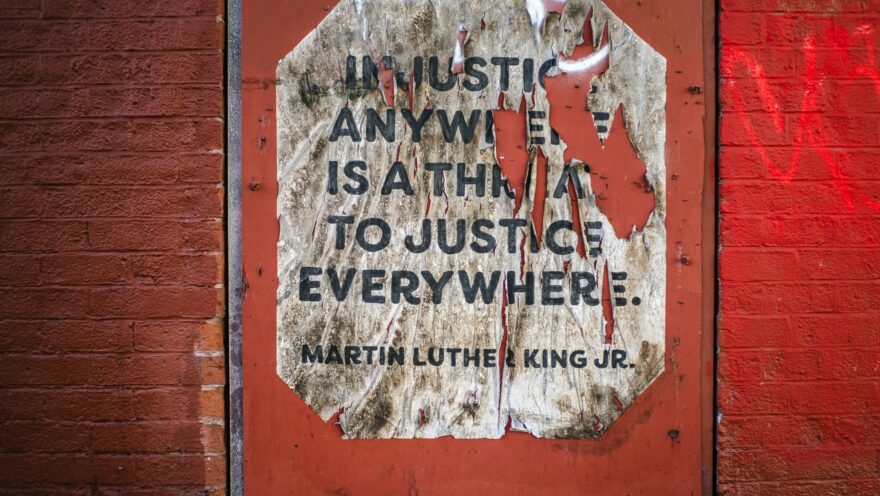
Over the last 5 years in particular, SWIDN has been working to tackle coloniality and colonialism in international development. Like most, we are on a journey of continuous learning around what decolonisation is and what it means for us and our members. Some of our members have recently requested that we continue our focus on decolonising and include practical tips to operationalise this, including online learning resources. We have also been asked to write for readers who don’t have a professional background in international development.
Each Thursday throughout June, we will be publishing a new blog about decolonisation in international development, addressing the big ideas together with the practical actions we can take in the sector. We’ll be sharing the blog online, together with an accompanying Toolkit as an e-bulletin for our members. If you are not yet a member but would like to join, please email us via info@swidn.org.uk.
To conclude the series, we’re hosting an informal, online discussion space to share our thoughts on the blog content and connect with peers. You can register for this open access, online event on Thursday 25th June 13-1400 BST here.
3/4: Rethinking How we Work: Challenging racism and coloniality in our approaches, tools and cultures
In our first blog, we explored how coloniality can be difficult to recognise in international development because it doesn’t always look the same in every context. Rather than seeing it as something confined to a past era in history, it’s an ongoing structure of power – one that consistently places higher value on some people, places, and ways of knowing over others.
Decolonisation, or the work of dismantling this imbalance of power and hierarchy of value, is often treated as a trend or a debate within our sector, while much of the work of Development carries on as normal. SWIDN often hear that our members are primarily interested in practical support and political discussions only after, if at all. This is understandable when our sector is under ever more pressure to find funding. We want to encourage our members to stay focused on questions of justice and equity, including decolonisation, and to maintain that momentum towards change despite the current funding pressures.
This is because decolonisation is a reckoning with how the international development sector came to be, and a question about what it is willing to become. If our goal is global justice and equity, we will never achieve this without addressing coloniality in our work. But more than that, we risk reinforcing the very inequalities we are working to address if we don’t see the politics of our work as integral to it. Continuing without that reflection means actively sustaining systems of injustice.
Understanding how we – as individuals, organisations and a wider sector – can take practical steps to address coloniality is the focus of this blog series. In this blog, we explore practical ways that we in UK based organisations can address coloniality, in the hidden values we hold, the models we use and the cultures we build, both in the broader international development system and within our own organisations.
What’s racism got to do with it?
Just like colonialism, Development is structured along racialised lines. The way power is distributed — who makes decisions, whose knowledge is valued, who is funded, and who is expected to implement — follows patterns shaped by colonial history and race. These dynamics don’t always appear openly racist, which is part of what makes them so persistent. Instead, they are often embedded in language, systems, and assumptions about professionalism, capacity, and best practice. But their effect is to reproduce unequal relationships that trace back to colonial hierarchies, where racism shaped access to power, resources, and legitimacy. International development isn’t just structured on colonial hierarchies of power: these hierarchies are shaped by racism.
Over the past 6 years, there has been a growing recognition of the extent of racism in international development. The violent murder of George Floyd in 2020 prompted organisations across the sector to issue statements acknowledging structural racism and committing to change. In the UK, a 2021 report by Bond highlighted the experiences of people of colour working in the sector and called for organisations to reflect more deeply on the colonial roots of the international development and humanitarian system, which continues to insidiously perpetuate racism in the UK and beyond. A 2022 inquiry into the philosophy and culture of aid by the UK Parliament found that ‘racism manifests in the very structure of international aid.’
This is especially clear in the language of the sector, which draws on the colonial logic of an us/them hierarchy, not just of difference, but of inferiority (Pailey 2021). The Christmas single from Band Aid is an obvious example – “Do They Know It’s Christmas?” is played across the airwaves every year and was actually re-released in 2024. Its racist lyrics refer to “the other ones” living in “a world of dread and fear,” “where nothing ever grows.” Another example is maternal health work. Maternal health interventions provide an example of how development narratives can privilege Western biomedical knowledge while portraying local expertise as deficient. Traditional birth attendants were frequently represented as obstacles to safe motherhood, despite their deep community knowledge and social legitimacy, illustrating how certain forms of knowledge become positioned as authoritative while others are marginalized (Davis-Floyd & Sargent, 1997). There are so many other, more subtle examples across global Development narratives that portray global majority people, cultures, knowledge, histories and challenges as inferior. Colonial ways of seeing the world are not just historical – they continue to be reproduced through popular narratives today, shaping how entire regions are imagined and understood.
In addition to language, we see racism showing up in international development in the following ways:
- The dominant narrative that views global majority countries as responsible for the inequality and injustice they experience, without acknowledging the historical and political causes of global injustice and the role of the UK and other donor nations in creating and maintaining this inequality.
- Fundraising messages that suggest that individuals have the personal capacity to overcome this systemic inequality, if only they had access to a simple solution (e.g. a microfinance loan, a training course, £5 a month for healthcare, etc). When people in global majority countries are positioned outside of the political systems in which poverty and inequality are created, this maintains racist ideas that people are responsible for their own oppression.
- Assumptions that solutions (through organisations, consultants, academics, research and policy, etc) to global inequality and injustice come from European/ Northern countries and ideas, not from the countries themselves who are systemically marginalised – both historically and today.
- Using images of people and their communities to showcase poverty and inequality and fundraise to alleviate them from it. Over time a narrative develops that all people experience extreme poverty in those countries, paving a way for white saviorism to come in and rescue them.
Dr Kalpana Wilson, from Birkbeck College in London, identifies racism in international development as a direct legacy of coloniality, and as a central component of international development practice and policy today. She points out that antiracism work needs to be central to efforts to tackle decolonisation and makes several recommendations to embed antiracist working in our sector, including:
Below, we share some tangible actions we can take towards decolonisation, alongside open source resources to support these actions. If you’re a SWIDN member, watch out for our email with a longer list of resources to support you further.
- We can name racism as structural. This is key to recognising that the system of international development that we all work within is problematic, and that the issue isn’t just with individual behaviours or mindsets alone. Acknowledging structural racism will help us as a sector to move beyond treating racism as isolated incidents or ‘bias training’ issues, and recognise it as embedded in the history and architecture of Development itself. It’s also key to bringing people in to this work together and using our roles for change, not for guilt.
- We can confront colonial histories openly. Acknowledging that international development is shaped by colonial power relations, rather than presenting it as a neutral or purely humanitarian field, is essential to making racism visible. We’ve offered a short summary of the history of international development in our second blog in the series to resource this. Understanding where, why and how our sector came about is a really tangible action that we as individuals can take to decolonise international development. Linking anti-racism to decolonisation is also a key part of understanding racism in Development as connected to broader systems of global inequality, including economic extraction and geopolitical power.
- We can reject a paternalistic framing of communities. Across our whole sector, we need to stop representing people in the countries in which we work as passive recipients of aid, and instead partner with communities as political actors and agents of change.
- This also includes a total rethink of the images and language we use and, for many, a radical change in approach that moves away from ‘capacity building’ narratives. It’s time to end the framing of communities as inferior or lacking capacity, and instead, decentre European/ Northern knowledge and actively value political, lived, and local knowledge as the primary sources of expertise.
- Racism in storytelling has been a known criticism of international development for decades. This guide on ethical and anti-racist storytelling provides a solid framework for changing our work.
Power, culture and the ways we work
When our charitable purpose is to support the communities we work with, it can be difficult to justify investing resources into our own organisations. But if we’re not paying attention to how power operates within our own teams – who is supported, who is excluded, who gets to lead – then it becomes much harder to challenge those same dynamics at a global level. If we don’t address power at home, we undermine our ability to address it anywhere else.
Addressing power inside organisations is not a side issue to decolonisation – it’s where the broader systems of inequality become real in everyday practice, and where they are either reinforced or challenged. In recent years, hypocrisies within international development have begun to be called out, including double standards in safeguarding, gender justice, and valuing people, etc. Every year on International Women’s Day, the Gender Pay Gap Bot shows up organisations advocating for gender justice while maintaining their own gender pay gap, for example, including international development charities. For IWD2026, SWIDN explored job-sharing as an approach (in thinking and process) to tackle unequal power and its structures in our work places.
Decolonisation requires us to look at the full web of hierarchies that shape international development: who holds authority, who sets the rules, whose knowledge is valued, and whose labour is made invisible. These dynamics don’t only exist ‘out there’ in global systems — they are also reproduced inside our own organisations. Postcolonial feminist thinking about international development offers us a wealth of knowledge and action for addressing power, including:
- We can make power visible, not invisible. This includes regularly surfacing who makes decisions, who influences them informally, and whose voices are routinely centred or sidelined. It also means understanding and monitoring how resources and opportunities are distributed, looking at who gets access to training, promotions and other opportunities, and working to rebalance this. If we are committed to shifting decision-making powers to partners and communities, we first need to recognise where they sit now. Acknowledging the existing power dynamics within our organisations first is a critical first step.
- We can interrogate leadership norms. This is so important to overcome myths of professionalism and mainstream models of leadership that preference privileged groups and exclude others with less power. We need to challenge assumptions about what ‘good leadership’ looks like and who those norms exclude (people with caring responsibilities, those without the privilege of a formal education, our neurodiverse colleagues, etc). Conversely, we can invest in feminist leadership practices, prioritising leadership that is relational, accountable, reflexive and rooted in care rather than control or authority.
- We can link our internal cultures to our external justice work, recognising that internal transformation is part of the political work needed to change how power functions in international development. We can ensure that values like gender justice are reflected in workplace policies, not just in external programming. This could mean publishing your gender pay gap even when the law doesn’t require it, and doing the same for your ethnicity pay gap. It may mean addressing how your workplace culture rewards and enables those with more privilege, and applying your antiracism action plan to your fundraising methods, etc.
- We can build reflexive organisational cultures. Reflexivity is a core value at SWIDN, and we are deeply committed to creating spaces for courageous reflection, peer learning, and action for change. This isn’t only about enabling us as individuals to notice and challenge norms, assumptions, and patterns of exclusion. It’s also about resourcing people properly so they have the time, support, and capacity to do that work in the first place. We’ve previously explored the link between wellbeing and transformation, and continue to promote the WECA Good Employment Charter and their standards, knowing that the health of our teams directly affects their ability to recognise coloniality and act to change it.
Questions to explore
- Has your organisation considered how power functions within it and around it? Are there mechanisms in place to make this visible? Does your organisational culture encourage discussions around the politics of power? Are there ways this can be improved? Are there tools that you use that you could share with others?
- Do you or your organisation have an antiracism policy? Is this a standalone policy with an accompanying action plan? Does this influence, guide or impact practice? How is this used in your fundraising, marketing, communications, programmes and policy work? Could you make this publically available to support others to do the same?
- Does the story of your work challenge or contribute to stereotypical ideas? Do you frame injustice as historical, political and structural? Have you found ways to do this well that you can share with others?
- Do your organisational policies match your justice goals? Does your approach to recruitment, parental leave, flexible working, annual leave, inclusive workplaces, etc align with your goals to challenge injustice outside the UK? Are there ways that teams can provide feedback on this? Can you share your best practice with peers?
This blog was written by Hannah S. Doornbos and Dr. Megha Kashyap, with input and guidance from Odein Princewill and Rachel Haynes.
References
In this article, we quoted the following sources:
Bond (2021b) Racism, power and truth: Experiences of people of colour in development. Lena Bheeroo, Pontso Mafethe & Leila Billing, 2021. Accessed on 12 March 2025 at https://www.bond.org.uk/wp-content/uploads/2022/03/bond_racism_power_and_truth.pdf
Davis-Floyd, R.E. and Sargent, C.F. (eds.) (1997) Childbirth and Authoritative Knowledge: Cross-Cultural Perspectives. Berkeley, CA: University of California Press.
Pailey, Robtel Neajai (2021) Race in/and Development” in Henry Veltmeyer and Paul Bowles (eds.) The Essential Guide to Critical Development Studies (2nd edition). Abingdon, Oxon: Routledge: 31-39
There is one more blog to go in this series of 4 on decolonisation. The final blog will aim to provide more of a tangible goal to aim our work towards, with some ideas of how to rebuild what we first need to dismantle. This will be published on Thursday 25 June 2026 at 9am.
We want to make sure that readers have space to engage in the context, to challenge and ask questions, and to share their perspective and experiences with peers. To create space for this, we are hosting an online working group on Thursday 25 June at 1300 – 1400 BST and you can register to attend here.
If you’re interested in accessing more support to address coloniality in your work, please get in touch with SWIDN. We’d love to build a community of actors committed to this work, and to help support this where we can. We are info@swidn.org.uk
More News
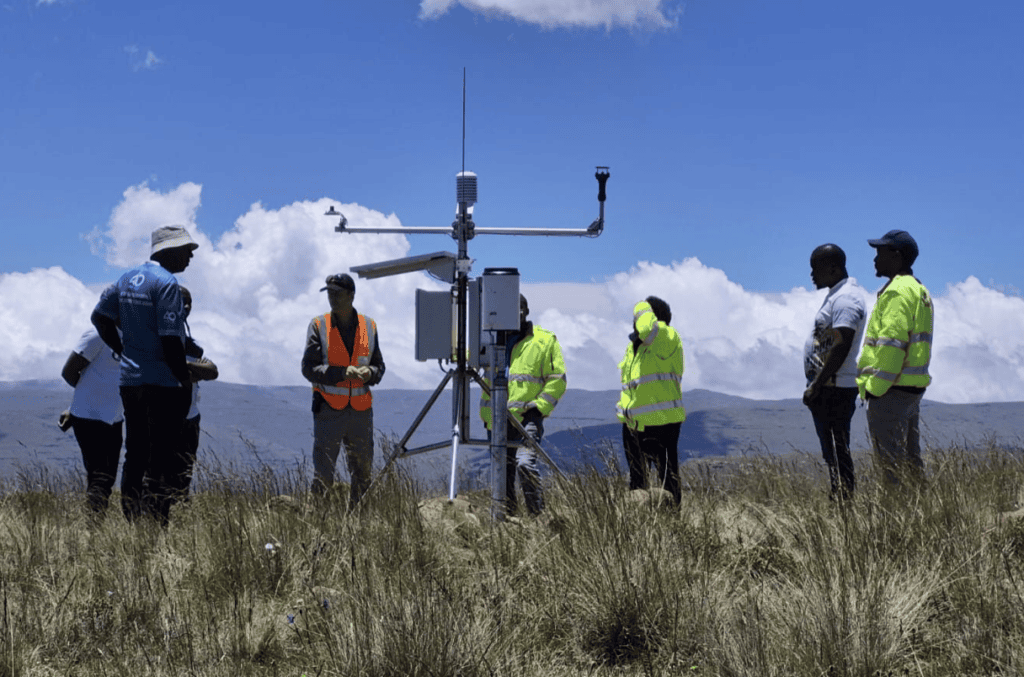
Spotlight on the African Mountain Research Foundation: Monitoring the Mountains that Shape a Continent
High up in the mountains of southern Africa — in Zimbabwe, Malawi, South Africa, and Lesotho — a quiet network of weather stations is generating data that could help predict the next drought, the next flood, the next climate shock for millions of people living in the valleys below. That network belongs to SWIDN Member…

Beyond the Lifeboat: How the RNLI is Tackling Drowning in Tanzania, and the Programme Management That Makes It Work
Rachel Roland has spent more than 35 years working in Global Justice — and if there’s one thread that runs through all of it, it’s a deep commitment to understanding communities on their own terms. Now a Senior International Programme Manager at the RNLI, Rachel is leading the organisation’s drowning prevention work in Tanzania, bringing…

Changing the Story: How The Advocacy Team Is Reconnecting the Public with Global Justice
Lorriann Robinson is the founder and lead of The Advocacy Team, a consultancy helping organisations navigate political influence, shape policy, and reimagine how the case for global justice is made. We spoke with her about her work, the projects keeping her team busy, and why she believes the sector’s most difficult moment might also be…