23 July 2026
Beyond the Lifeboat: How the RNLI is Tackling Drowning in Tanzania, and the Programme Management That Makes It Work

Rachel Roland has spent more than 35 years working in Global Justice — and if there’s one thread that runs through all of it, it’s a deep commitment to understanding communities on their own terms. Now a Senior International Programme Manager at the RNLI, Rachel is leading the organisation’s drowning prevention work in Tanzania, bringing decades of hard-won experience to one of the most overlooked public health challenges in the world.
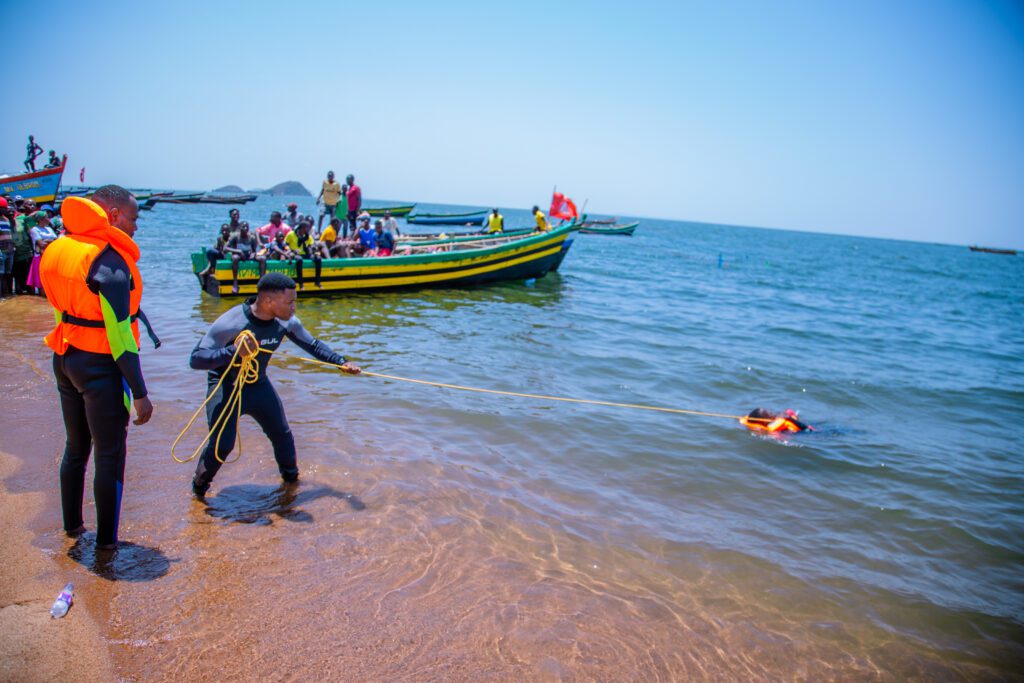
Photo Credit: EMEDO
A career that began in the field
Rachel’s route into global justice was shaped from the very start by direct experience on the ground. Armed with a masters in Irrigation Management, she headed to Tanzania as a volunteer working on pest control — living in communities, learning Swahili, and working for the Tanzanian government rather than a European donor or NGO.
“I wasn’t looking over my shoulder at a European funder, I was working for the Tanzanian government. So I had the opportunity to learn things from the community upwards in a different sort of way.”
It was an education that no classroom could have provided. From Tanzania she moved to Nigeria, spending three years as a pest control trainer in Kaduna, before returning to the UK to join a university international development centre — where she spent the next 27 years working across training, consultancy, capacity development, and facilitation. Then came a phone call that changed her direction again, and eventually a permanent role at the RNLI.
“I started my career in Tanzania and hopefully I’ll end it connected to Tanzania. I took so much at the beginning because I didn’t have much life experience — and I hope that now I can give back much more effectively.”
The RNLI’s work beyond the UK coastline
Most people associate the RNLI with lifeboat crews and coastal rescues around the UK and Ireland. But the organisation’s international department — now approaching 15 years old — has been quietly building an evidence base for drowning prevention in some of the world’s most affected communities, and that work has now been formally recognised as one of the RNLI’s three core strategic goals.
Rachel’s focus is Tanzania, where the RNLI is working to address occupational drowning — the kind that happens not in dramatic disasters, but one by one, day by day, largely invisible to the wider world.
“The drownings that get reported tend to be ferry disasters or transport incidents involving lots of fatalities. But the majority of fatalities happen daily, one by one. We’re trying to improve the visibility of that.”
The work spans two main locations. On Lake Victoria in the northwest of the country, the Lake Victoria Drowning Prevention Project has spent several years testing interventions with fishing communities — trialling around ten different approaches before identifying four that will be scaled across seven communities in the next phase. In Zanzibar, the Community Action Against Drowning project is working with children, seaweed farmers, and coastal gleaners to build water safety skills, while also supporting local government to embed drowning prevention into national policy.
Underpinning both projects is a commitment to national-level change. Working through their partners EMEDO — the Environmental Management and Economic Development Organisation — the RNLI is supporting Tanzania’s National Drowning Prevention Network, helping to build the political will and media coverage that turns local learning into government strategy.
What good partnership looks like
Rachel is thoughtful about what makes her role different from much of her previous work in global justice. For the first time in her career, she says, she is genuinely positioned to be a good partner — not just a funder making demands, but an organisation that supports its partners with the capacity development they actually want, on their terms.
“We’re not just demanding things from our partners. We’re actually able to support them in the ways they want, and we hope to leave them in a more sustainable position when we eventually move out than when we arrived.”
Both of the RNLI’s Tanzania partners are on their own journeys of growth. EMEDO, which was very small when the partnership began, has developed significantly in organisational capacity and now runs smoothly as the secretariat of the National Drowning Prevention Network. The Panje Project in Zanzibar is a well-oiled organisation with around 60 community swim instructors and trained lifeguards, now taking on a broader portfolio of work for the first time.
Day to day, Rachel describes her role as something like conducting an orchestra — coordinating with specialists who aren’t in the RNLI’s International Team, keeping everything cohesive, troubleshooting problems, and also staying alert to the unexpected opportunities that arise simply by being closely connected to partners and communities in Tanzania.
“There are lots of opportunities that pop up day to day that weren’t anticipated. I might get a call saying this government department wants to talk to us, or a researcher wants to connect. A lot of the challenge is finding the flexibility to respond to those moments.”
The skills that hold it all together
Ask Rachel what makes a good programme leader and she talks about language — she speaks Kiswahili — and about lived experience that helps her understand what will work in a given context and what won’t. She talks about interpersonal skills, communication, and the courage to believe in what you’re doing even when progress is slow. And she talks about knowing when to step back.
She is currently undertaking a Level 5 coaching apprenticeship, a natural evolution of the capacity development approach she has always brought to her work — and one she hopes will benefit both her Tanzania programme and her wider role within the RNLI’s internal coaching pool.
Beyond her programme work, Rachel sits on RNLI’s EDI steering committee, is part of the organisation’s accessibility champions group, and has shared her own personal journey on decolonising development practice with the RNLI’s Race Equality Network — describing it as an honest but uncomfortable reflection on what it means to be a funder.
The value of being part of a network
Rachel is a firm believer in the power of connection — both professionally and personally. Within the SWIDN network, her team have recently benefited from safeguarding training delivered by Hub Cymru Africa, with board members participating alongside staff.
“That’s a great concrete example of how helpful being part of the network has been. It’s a service we wouldn’t otherwise have had such easy access to.”
More broadly, Rachel sees networks as essential to the kind of cross-pollinating that makes development work better — the chance to meet people you wouldn’t otherwise encounter, share ideas across organisations, and stay connected to a wider community of people who care about similar things.
“I’m on that side of the spectrum that believes in people-centeredness. Networks matter. You meet people you wouldn’t otherwise meet, you share ideas, you cross-pollinate.”
It’s an instinct she has carried throughout her career — from a volunteer in a Tanzanian pest control programme to one of the RNLI’s most experienced international programme leaders. And judging by the momentum behind the drowning prevention work she is helping to build, there is still plenty more to come.
Rachel Roland is Senior International Programme Manager at the RNLI, leading the organisation’s drowning prevention programmes in Tanzania. To find out more about the RNLI’s international work, visit rnli.org/international
More News
Guest Blog: The Power, and Politesse, of Partnership
We’re pleased to share this guest article written by SWIDN member Bridge2Aid. Working alongside Tanzanian Health, Environment and Development Initiatives (THEDI), a local NGO, Bridge2Aid supports programmes led by Tanzanian partners to strengthen oral healthcare through training and skills sharing. With local expertise and leadership at the heart of the work, the partnership demonstrates how international collaboration…
Spotlight on the African Mountain Research Foundation: Monitoring the Mountains that Shape a Continent
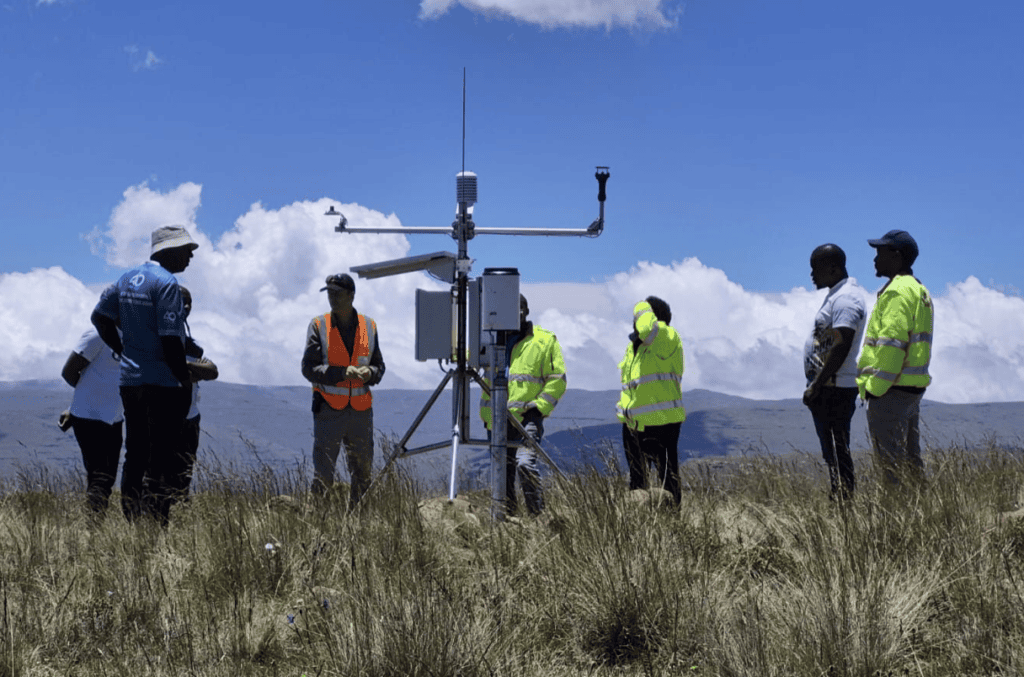
High up in the mountains of southern Africa — in Zimbabwe, Malawi, South Africa, and Lesotho — a quiet network of weather stations is generating data that could help predict the next drought, the next flood, the next climate shock for millions of people living in the valleys below. That network belongs to SWIDN Member…

Changing the Story: How The Advocacy Team Is Reconnecting the Public with Global Justice
Lorriann Robinson is the founder and lead of The Advocacy Team, a consultancy helping organisations navigate political influence, shape policy, and reimagine how the case for global justice is made. We spoke with her about her work, the projects keeping her team busy, and why she believes the sector’s most difficult moment might also be…