11 June 2026
Taking Action on Decolonisation: Where colonialism and development met (Week 2)
Over the last 5 years in particular, SWIDN has been working to tackle coloniality and colonialism in international development. Like most, we are on a journey of continuous learning around what decolonisation is and what it means for us and our members. Some of our members have recently requested that we continue our focus on decolonising and include practical tips to operationalise this, including online learning resources. We have also been asked to write for readers who don’t have a professional background in international development.
Each Thursday throughout June, we will be publishing a new blog about decolonisation in international development, addressing the big ideas together with the practical actions we can take in the sector. We’ll be sharing the blog online, together with an accompanying Toolkit as an e-bulletin for our members. If you are not yet a member but would like to join, please email us via info@swidn.org.uk.
To conclude the series, we’re hosting an informal, online discussion space to share our thoughts on the blog content and connect with peers. You can register for this open access, online event on Thursday 25th June 13-1400 BST here.
2/4: Where Colonialism and Development Met: A short and painful history of our sector
One of the perspectives that we’ve heard repeatedly over the years from across the sector is the view that, if an organisation or individual is working in a country which was never historically colonised, then decolonisation is irrelevant to them and their work. In the first blog of this series, we described how coloniality is not just a period in history, but a structure of power that continues to organise people and ideas into a hierarchy of value today (Sabelo Ndhlovu-Gatsheni 2023). Since the very structures of international development themselves are colonial, the need to decolonise Development applies to all of us, working in all countries currently under the colonial label of ‘developing’, not only those with a history of colonialism.
In this blog, we show how international development as an idea came out of colonialism as a historical event. We share a brief history of Development to show that the ideas of Development replicate colonial hierarchies so that, irrespective of the country context in which we might work, we are all working within a system constructed on colonial hierarchies. The work to decolonise Development belongs to us all, and particularly to those of us in the UK whose lives continue to benefit from it.
A short history of international development
The idea of Development as we know it today began to take shape in the 1940s, particularly in relation to countries in Africa and Asia that were under colonial rule (Sabelo Ndlovu-Gatsheni 2023). In the UK, this shift is reflected in the Colonial Development and Welfare Act of 1940, introduced partly in response to growing anti-colonial sentiment amongst the British public at the time. This Act represented a shift in language and approach from empire to the idea of ‘trusteeship’, positioning Britain as responsible for guiding colonial populations towards a constructed idea of ‘Development’.
Anti-colonial historians show that as British rule came to an end across much of Africa from the 1950s onwards, levels of poverty and inequality were far higher than they had been before colonisation (Walter Rodney 2018). Research shows that richer nations continue to take more from global majority countries than they give and continue to do so. When countries in Europe and North America were rebuilding after World War II and navigating the tensions of the Cold War, maintaining economic and political influence in formerly colonised countries, which had already generated significant wealth for them, remained a clear priority (Gilbert Rist 2014). With the idea of Development already gaining ground within global policy, it became a convenient and obvious means by which European and North American nations could remain involved in former colonial states. You can hear more about this era in history and how it shaped international development today in this panel discussion at the SWIDN Conference 2024.
What looked like a new, more benevolent approach to our relationship with global majority countries also allowed old power dynamics to continue in a different form. Professor Uma Kothari, an academic based at the University of Manchester, highlights just how subtle this shift from colonialism to development was. In many cases, the same individuals who had worked as Colonial Officers simply moved into new roles as Development Officers after independence (Kothari 2006). As a result, Development continued with many of the same values, assumptions, practices – and even people – that had shaped the colonial project in the first place (Kothari 2006).
As the idea of Development began to grow in global policy and practice, some of the key characteristics of coloniality shaped its trajectory, and these remain today. These include:
- The distinction between ‘developed’ and ‘developing’ nations, which is socially produced, not natural, and rooted in colonial power relations. Activities are labelled ‘Development’ based on where they take place, not what they involve. For example, improving healthcare systems is called ‘development’ in a country classed as ‘developing’ but understood as ‘public policy’, ‘reform’, or ‘innovation’ in the UK. (See Lata Narayanaswamy’s article listed below for an in depth discussion of this.)
- Development aid continues to reproduce colonial power dynamics, where the UK and other donors set the priorities and decide what success looks like. European standards are treated as the benchmark, while local knowledge and ways of understanding the world are downgraded or overlooked. One result of this is how inequality is framed. As we explored in the first blog in this series, Development narratives often present inequality as a problem internal to a country — something it has failed to fix itself — rather than recognising it as the outcome of colonial histories and ongoing political and economic decisions.
- Colonial approaches to governance assumed that systems and solutions had to be brought in from the outside. Early Development models carried that same assumption forward — that progress comes from external expertise, rather than from within communities themselves. Over time, this has shaped the structures we see today: donor and recipient, charity and partner, UK-based organisations bringing solutions in to other countries. Examples of how badly this works in practice can be found in this report by Dr Megha Kashyap and Ipsita Divedi 2025, and this SWIDN Conference 2025 session shows the absurdity of this approach.
- Aid is tied in ways that benefit European or North American economic and political interests. This can be explicit, such as requiring funds to be spent on goods and services from donor countries, or more subtle, shaping how and where aid is used in line with strategic priorities. For example, as much as 90% of UK aid procurement contracts were awarded to British companies in 2018.
Making the political visible
One of the biggest challenges in decolonising development today is making the politics behind it visible. The subtle ways power operates can be hard to see, and even harder to confront. It can feel deeply uncomfortable to recognise that the work aimed at addressing inequality is rooted in the same colonial histories that helped create it in the first place. From its origins, Development has never been neutral. Coloniality still shapes how Development operates today, and we can’t afford to see it as neutral any more.
There are roughly 7000 registered charities in the UK working in international development today. They are diverse organisations, made up of people who are deeply committed to justice, and grounded in long-standing relationships with partners, colleagues, and friends in the countries where they work. Beyond the number of registered charities in the UK are the thousands of individuals, registered corporates, universities, think tanks and civil service organisations that also contribute to the UK’s international development work. That’s exactly why we began this blog series by recognising that decolonising development will look different for each of us. There’s no single path, and no one-size-fits-all answer. But at the same time, we’re all operating within a wider system of Development that is shaped by colonial histories and unequal power, and continues to cause harm today. However different our roles or organisations may be, that structure influences, and is influenced by, us all. The aim of this series is to make that visible, and to show how those deep-rooted dynamics continue to shape the sector and maintain inequality today.
Below, we share some tangible actions we can take towards decolonisation, alongside open source resources to support these actions. If you’re a SWIDN member, watch out for our email with a longer list of resources to support you further.
- We can talk about the developed/ developing binary as a created category, not a natural distinction, and name why it was created and by who. We can do this with the language we use, in our storytelling, in our reporting to donors, and in our own work with partners and peers. Have a look at this resource from Bond which talks about the politics of coloniality in the language of Development.
- We can change the centre of our work, moving it back to the countries in which we work. For each of us, this will look different, but may include moving job roles, the location of meetings and decisions, relocating who and how ‘success’ is defined and measured in our MEL systems, giving storytelling back to the communities whose stories are featured, etc. There is a growing wealth of resources relating to locally-led development in the sector. You could start with the recordings from the SWIDN Conference on Locally-Led Development in 2024 and with this blog from long-term SWIDN member The Motivation Trust, who shifted their centre in early 2026.
- We can engage with the history and politics of Development, recognising that while we may work within non-governmental organisations, we are all working within a highly political structure where national agendas are at play. Understanding the specifics of the contexts we work in is key to spotting how and where coloniality shows up in our work.
- We can decolonise our own knowledge, seeking out knowledge from experts in the countries in which we work, and from global majority academics and practitioners. Sabelo Ndlovu-Gatsheni talks about ‘knowledge for control’ and says ‘the knowledge which carried us previously and plunged us into the current problems cannot be the same knowledge that enables us to come out of crisis and carry us into the future.’
- We can commit to the lifelong journey of unlearning-action-reflection-relearning that decolonisation involves, knowing that this looks different for everyone, but that every step forward, however small, matters.
Questions to explore
- Do your teams, trustees, supporters and networks know the history of Development? Is there a way to share this context that brings people in to the work of decolonising our sector? Do you know of sources you can share with others?
- What is the history of the country you work in? If it wasn’t directly colonised, can you see how historical colonialism influenced it? What could you read about this history, from the perspective of people in that country, to develop your understanding of historical influences on Development? What could you share with others that might support their learning?
- How is success measured in your work? Do these measures come from the UK (A donor? An NGO?) or from the country in which you work? Who decides the frameworks to measure success?
- How do you tell the story of your work? Does it include the historical context of the country you work in? Is there a way to make the causes of inequality and injustice clearer? Have you seen this done well and could you share examples with your peers?
- If you fund partners to implement programmes, what restrictions exist in these funding mechanisms? What changes can you make to ensure your funding is less restrictive and more reparative?
This blog was written by Hannah Stevenson Doornbos and Dr. Megha Kashyap, with input and guidance from Odein Princewill and Frances Hill.
References
In this article, we quoted the following sources:
Kashyap, Megha and Dwivedi, Ipsita (2025) Decolonising Foreign Funding Policies from Localised Contexts in Kenya, India and Bangladesh. Walking the Talk. Available at: Walking the Talk Research Project (Accessed: 8 June 2026)
Kothari, Uma (2006) From Colonialism to development: Reflections of former Colonial Officers, Commonwealth & Comparative Politics, 44:1, 118-136
Narayanaswamy, Lata (2023) What is ‘development’ and can we ‘decolonise’ it? Some ontological and epistemological reflections. In H. Melber et al. (Eds.), Challenging global development: Towards decoloniality and justice (Chapter 13). Palgrave Macmillan
Ndlovu-Gatsheni, Sabelo (2015) Genealogies of Coloniality and Implications for Africa’s Development. Africa Development, Volume XL, No. 3, 2015, pp. 13-40
Rist, Gilbert (2014) The Invention of Development, in The History of Development: From Western Origins to Global Faith. London, United Kingdom: Zed Books
Rodney, Walter (2018) How Europe Underdeveloped Africa. Bogle-L’Ouverture Publications
Rutazibwa, Olivia U. (2020) Hidden in Plain Sight: Coloniality, Capitalism and Race/ism as Far as the Eye Can See, Millennium: Journal of International Studies 2020, Vol. 48(2) 221–241
The Guardian (2012) USAid now free to buy goods from companies in poor countries, written by Claire Provost, 6 Feb 2012, accessed 11 March 2025 at https://www.theguardian.com/global-development/2012/feb/06/usaid-changes-procurement-policy
If you’re interested in accessing more support to address coloniality in your work, please get in touch with SWIDN. We’d love to build a community of actors committed to this work, and to help support this where we can. We are info@swidn.org.uk
More News
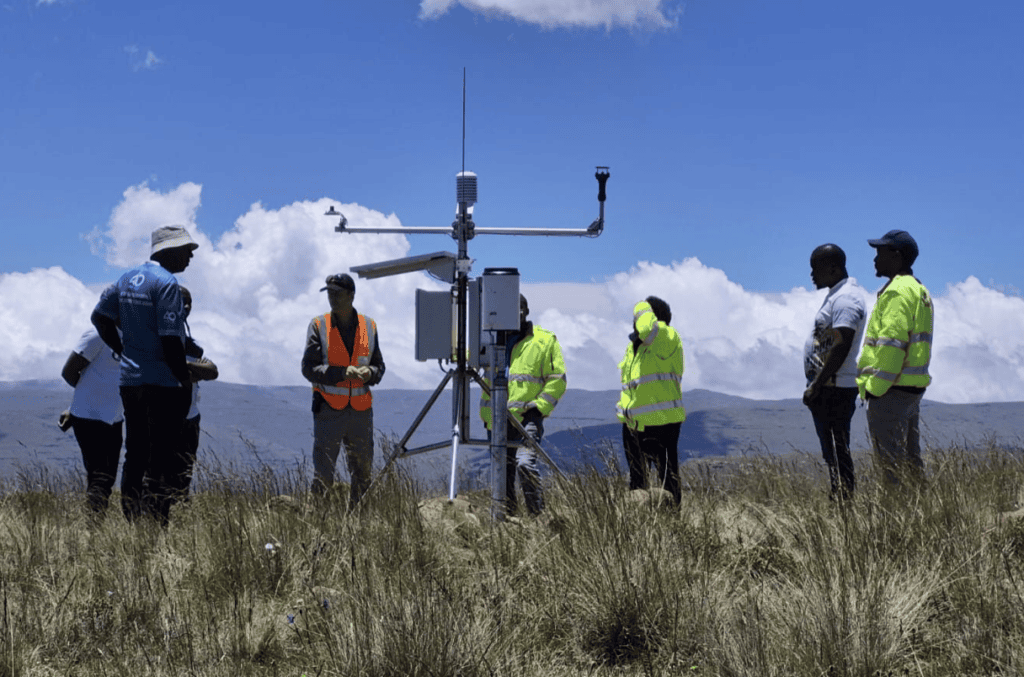
Spotlight on the African Mountain Research Foundation: Monitoring the Mountains that Shape a Continent
High up in the mountains of southern Africa — in Zimbabwe, Malawi, South Africa, and Lesotho — a quiet network of weather stations is generating data that could help predict the next drought, the next flood, the next climate shock for millions of people living in the valleys below. That network belongs to SWIDN Member…
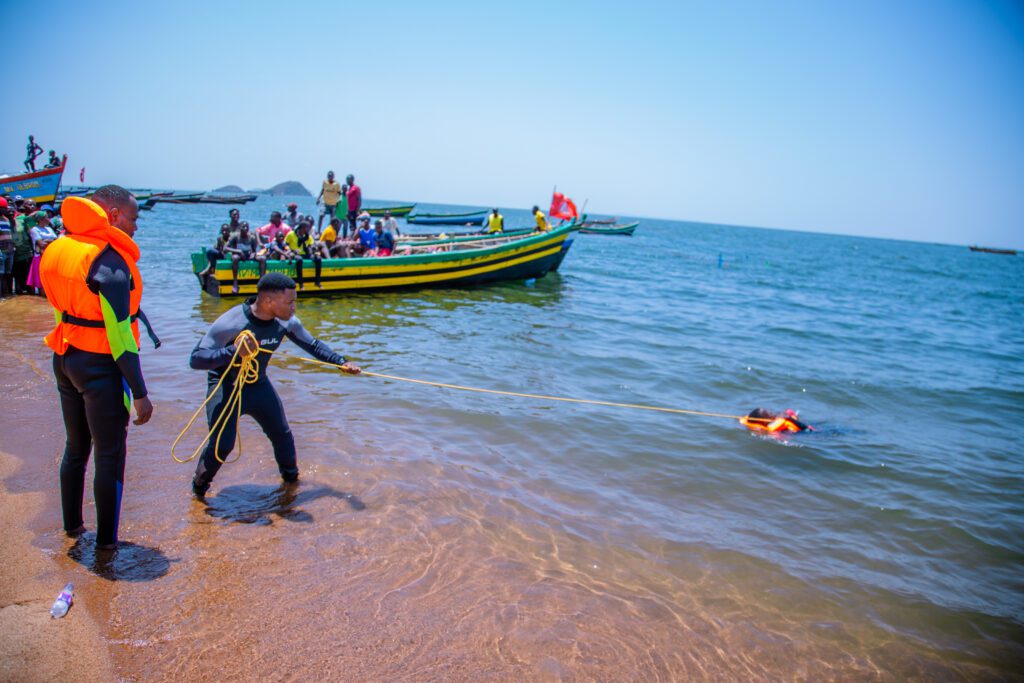
Beyond the Lifeboat: How the RNLI is Tackling Drowning in Tanzania, and the Programme Management That Makes It Work
Rachel Roland has spent more than 35 years working in Global Justice — and if there’s one thread that runs through all of it, it’s a deep commitment to understanding communities on their own terms. Now a Senior International Programme Manager at the RNLI, Rachel is leading the organisation’s drowning prevention work in Tanzania, bringing…

Changing the Story: How The Advocacy Team Is Reconnecting the Public with Global Justice
Lorriann Robinson is the founder and lead of The Advocacy Team, a consultancy helping organisations navigate political influence, shape policy, and reimagine how the case for global justice is made. We spoke with her about her work, the projects keeping her team busy, and why she believes the sector’s most difficult moment might also be…