24 June 2026
Taking Action on Decolonisation: Development as Charity (Week 4)
Over the last 5 years in particular, SWIDN has been working to tackle coloniality and colonialism in international development. Like most, we are on a journey of continuous learning around what decolonisation is and what it means for us and our members. Some of our members have recently requested that we continue our focus on decolonising and include practical tips to operationalise this, including online learning resources. We have also been asked to write for readers who don’t have a professional background in international development.
Each Thursday throughout June, we will be publishing a new blog about decolonisation in international development, addressing the big ideas together with the practical actions we can take in the sector. We’ll be sharing the blog online, together with an accompanying Toolkit as an e-bulletin for our members. If you are not yet a member but would like to join, please email us via info@swidn.org.uk. This final blog has been published a day early ahead of our online event on Thursday 25th June.
To conclude the series, we’re hosting an informal, online discussion space to share our thoughts on the blog content and connect with peers. You can register for this open access, online event on Thursday 25th June 13-1400 BST here.
4/4 Development as charity: Finding our path away from coloniality and towards solidarity
For many of us, the path into this sector started with a moment of recognition — an awareness of the injustice and inequality faced by communities in marginalised parts of the world. This may have come from travelling, or through relationships with people who live that reality. When we looked for ways to engage in working towards global justice, the most obvious model for this has been through charity. In our final blog, we take a closer look at that model — questioning its assumptions and exploring why both the idea and structure of charity need to be decolonised.
We know from the history of international development that the idea of Development coincided with UK Government policy moving from colonial governance to trusteeship in the 1940s. The UK’s historical approach to Development has shaped the international development charity sector today. Sector-leading charities like Oxfam (1942) and Christian Aid (1945) were founded in the 1940s and ‘50s during this policy period, initially focused on post-war Europe but then expanding into former British colonies across Africa and Asia. Geographical priorities for UK Government Development policy today remain influenced by our colonial history. Over time, more charities adopted a model of Development rooted in the perspectives and priorities of the era. Today, with around 6,880 registered international development charities in England and Wales and an estimated £7.6 billion raised annually (SWIDN 2024), charities sit firmly at the centre of UK Development practice.
Charity vs. Justice
A key criticism of charities is that they treat the symptoms of inequality but fail to either address the structural causes or replace them with sustainable alternatives (see Arundhati Roy 2014). By tackling inequality through responding only to its consequences and not to its structural causes, the deeper realities driving injustice get sidelined or silenced altogether, and so injustice and inequality continue.
In the context of the international development charity sector, we see the harmful consequences of Development as charity in some of the following ways:
Another criticism is that when INGOs rely on donor funding, their work is often shaped by the priorities of those donors — whether the political agendas of governments or the economic interests of philanthropists. These priorities don’t always align with the deeper goal of eradicating inequality, since both states and philanthropic actors operate within structures of interest and power (Alesina & Dollar 2000). ODA is frequently shaped by donors’ geopolitical and economic priorities, while philanthropic approaches have been criticised for enabling wealthy actors to influence development agendas in ways that may preserve existing concentrations of wealth and power (Alesina & Dollar, 2000; McGoey, 2014). We know the battle our members have to secure long term, repeated sources of funding that are trust-based, responsive to community priorities, and can deliver tangible change to structural inequality.
- Charity work addresses immediate needs (food, shelter, services) but rarely challenges the systems that create and sustain those needs – like unequal wealth distribution, economic access and political power imbalances. This also happens when charity frames structural injustice as individual misfortune (e.g. ‘these people need help’) rather than the result of policies, institutions, and power relations that should be challenged.
- Charity positions some people as helpers and others as receivers, reinforcing power imbalances and enabling colonial binaries such as developed/ developing and donor/ beneficiary. This also feeds saviourist narratives which reinforce blame on individuals for systemic problems.
- Charity can be highly conditional and controlled. Many of us know the donor requirements we are expected to meet, first to access funding and then to report on its impact. Access to charity funds frequently comes with eligibility rules, surveillance expectations, and considerable reporting requirements, all of which mirror the same systems of top down power over others that produce inequality in the first place.
- Donors, including European/ Northern governments and philanthropists – opt in or out of funding commitments with ease, when ‘Development’ funding is framed as charitable rather than the just return of resources and capacity to previously exploited nations (Arundhati Roy 2014). The fallout of the UK, US and many countries across Europe breaking their promises on aid funding in 2025 has been catastrophic for global inequality and injustice.
- Similarly, when Development funding is framed as optional charity, priorities for funding shift with the change in government, influenced by the political agenda of those in power at any one time. Efforts to address key areas of inequality stop and start, staying short-term, temporary or vulnerable to political crisis, raising questions about who has the power to define Development goals and allocate resources.
- Charity can also legitimise harmful institutions in several ways. For example, governments and corporations may support or showcase charitable giving while continuing practices that harm – often in the same geographical locations (e.g. selling arms, avoiding tax, paying low wages or damaging the environment).
How can we Decolonise Charity?
We recognise that, in the UK, there are limited legal structures available for social justice organisations. For many of us, registering as a charity is what enables us to operate and sustain our work. At the same time, charitable status shapes how we work, as we are governed by and accountable to the Charity Commission. Here, we want to invite a critical discussion about the model of charity – not as a legal entity, but as a social and political structure.
US activist and professor Dean Spade is critical of charity as a model that maintains injustice through tackling symptoms, but leaving the systems that produce inequality unchallenged. He champions civil society as an alternative space which enables solidarity to happen. Seeing the distinction between charity and civil society is key to understanding what we’re working towards when we decolonise, not just what we’re moving away from. Chandra Mohanty – a leading academic who we referenced in the first blog – writes about a feminist practice of solidarity (2003) as an alternative to Development practice – not feminist in terms of a focus on women, but feminist in terms of addressing power and politics to achieve justice for all. Decolonising demands a fundamental redistribution of power and knowledge within aid systems, moving from paternalistic models of giving towards solidarity, mutual accountability, and community-led change.
In our work to decolonise international development, it can be helpful to aim towards a practice of decolonised, antiracist global solidarity that might include some of the following:
- Working to tackle injustice that is led by people directly affected. Solidarity means not deciding for others, designing for others, introducing solutions from outside, or creating or maintaining a reliance on external resources, knowledge or practices. It means partnering as equals to achieve a shared vision of justice, which benefits us all.
- Resources that are shared without hierarchy, conditionality or gatekeeping. Grant funding is trust-based, given without conditionality or surveillance; relationships with donors and networks are shared without agenda; tools, resources and capacity are gifted between organisations and partners unconditionally; a plan is in place for the permanent shift of access and opportunity back to the majority world.
- Rejecting savourism and busyness cultures that protect colonial logics, and embracing movements for change that deprioritise individual brands in place of achieving change. Charity cultures can be effective at making power visible, or they can replicate colonial values that keep power hidden.
- Challenging unjust systems, with a focus on changing structural causes of inequality, not just meeting immediate needs. Aid spending is tied to organizing and systemic change, which tackles causes of injustice alongside sharing information and access to better understand structural injustice.
- Relationships that are built around shared experiences, collective care and political struggle, not based on short term interventions or established on a power imbalance of donor/ recipient. They are mutually beneficial: expertise is sought and valued on both sides; each recognises our interconnectedness.
- Historical harms are acknowledged and addressed, both to inform the work of challenging structural causes of inequality, as well as to shape solidarity that is truly reparative and restorative.
Starting to rebuild a vision of what could replace the current model of Development is just as important as identifying the assumptions, habits, and practices that need to be unlearned in order to decolonise Development. There is work happening across our sector to imagine an alternative solidarity in practice, including The Ringo Social Lab – Re-imagining the International NGO – which brings together thinkers, leaders and activists from across civil society around the world to re-imagine the role of INGOs and global civil society. Peace Direct have done some work on re-imaginging the role UK-based organisations and individuals can play in the fight for global justice, outside the static model of charity as implementor that we’ve inherited, and after years of their own learning around decolonisation. At SWIDN, we believe that change happens in the collective, through working together and sharing the journey, connecting where we need support and building relationships that inspire, challenge and resource us all towards a practice of solidarity. Joining us, as a member or supporter, means joining a group of people working together on this journey of change.
This month’s blog series has painted a picture of coloniality in international development, exploring what Development means and the international structure that was established to achieve it, as well as how colonial logics are embedded across systems and practices that shape much of our work to tackle global injustice today. It has been heavy at times, and we want to acknowledge the very real discomfort of realising our own individual roles in this system, as well as the work required to truly decolonise international development.
In this final blog, we’ve offered a vision for change that builds on the recommendations and actions we’ve identified throughout the series. It’s not enough to move away from what isn’t working — we also need to be clear and intentional about what we’re moving towards. But, just as we started this series by saying that decolonisation looks different for us all and our own organisations, so does building a decolonised alternative. Working together to build an alternative solidarity is the work of us all.
Questions to explore
- What can you do in your organisation or your work today to create more space to understand and engage with decolonisation in Development? Can you share this blog with others or write one of your own? Can you share other resources within your team or network?
- Are there more ways that you can be part of building a movement, and not just programmes? If the end goal isn’t just better services, but redistributing resources, changing laws, dismantling harmful systems, reducing division, and building community, how would your day to day job change? What networks and knowledge can you be building today towards joining or building a movement for change?
- How can you start to shift the balance of power within your work? Is there open, visible and inclusive dialogue about power in your organisation? Can you shift towards building collective capacity and a more equal sharing of expertise? This might include a focus on skill-sharing and community self-determination, with a proactive plan to reduce reliance on UK based funding or resources within an identified timeframe. Have a look at the work of Dolen Cymru for an idea of mutual learning and shared partnerships and at the experience of the Motivation Trust who have transitioned power out of the UK entirely.
- How does your organisation hold itself accountable to the communities it serves? Is there a meaningful mechanism for those communities to influence decisions and priorities? Have you seen this done well? Can you share your learning with your others?
We’d love to hear your thoughts and feedback on this blog series, as well as what your organisation has experienced and where you are keen to connect. Join us on Thursday 25 June between 1-2pm BST for an informal, online working group to talk through some of the ideas in this series and connect with peers across the South West. You can register to attend here.
This blog was written by Hannah S. Doornbos and Dr. Megha Kashyap, with input and guidance from Odein Princewill, Rachel Haynes and Frances Hill.
References
In this article, we quoted the following sources:
Alesina, A. and Dollar, D. (2000) ‘Who gives foreign aid to whom and why?’, Journal of Economic Growth, 5(1), pp. 33–63. doi:10.1023/A:1009874203400
McGoey, L. (2014) ‘The philanthropic state: market–state hybrids in the philanthrocapitalist turn’, Third World Quarterly, 35(1), pp. 109–125. doi:10.1080/01436597.2014.868989.
More News
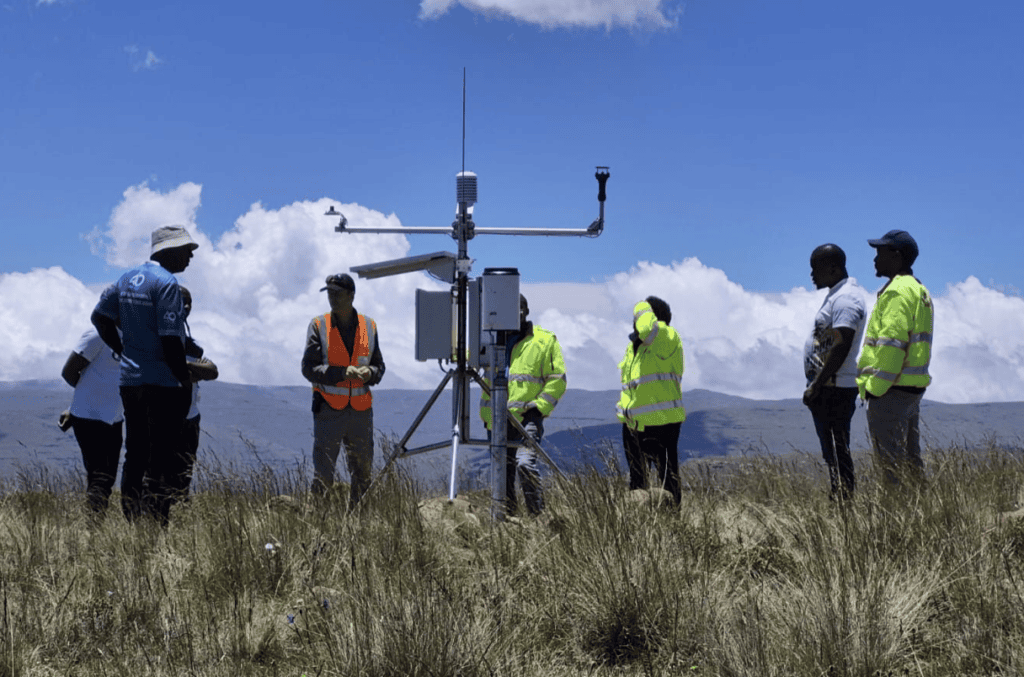
Spotlight on the African Mountain Research Foundation: Monitoring the Mountains that Shape a Continent
High up in the mountains of southern Africa — in Zimbabwe, Malawi, South Africa, and Lesotho — a quiet network of weather stations is generating data that could help predict the next drought, the next flood, the next climate shock for millions of people living in the valleys below. That network belongs to SWIDN Member…

Beyond the Lifeboat: How the RNLI is Tackling Drowning in Tanzania, and the Programme Management That Makes It Work
Rachel Roland has spent more than 35 years working in Global Justice — and if there’s one thread that runs through all of it, it’s a deep commitment to understanding communities on their own terms. Now a Senior International Programme Manager at the RNLI, Rachel is leading the organisation’s drowning prevention work in Tanzania, bringing…

Changing the Story: How The Advocacy Team Is Reconnecting the Public with Global Justice
Lorriann Robinson is the founder and lead of The Advocacy Team, a consultancy helping organisations navigate political influence, shape policy, and reimagine how the case for global justice is made. We spoke with her about her work, the projects keeping her team busy, and why she believes the sector’s most difficult moment might also be…