4 June 2026
Taking Action on Decolonisation: A Toolkit for Practice (Week 1)
Over the last 5 years in particular, SWIDN has been working to tackle coloniality and colonialism in international development. Like most, we are on a journey of continuous learning around what decolonisation is and what it means for us and our members. Some of our members have recently requested that we continue our focus on decolonising and include practical tips to operationalise this, including online learning resources. We have also been asked to write for readers who don’t have a professional background in international development.
Each Thursday throughout June, we will be publishing a new blog about decolonisation in international development, addressing the big ideas together with the practical actions we can take in the sector. We’ll be sharing the blog online, together with an accompanying Toolkit as an e-bulletin for our members. If you are not yet a member but would like to join, please email us via info@swidn.org.uk.
To conclude the series, we’re hosting an informal, online discussion space to share our thoughts on the blog content and connect with peers. You can register for this open access, online event here.
1/1. Defining Decolonisation: Why this isn’t simple (and why it matters)
We’ll be honest, we don’t love the term ‘decolonisation’. Like lots of buzzwords used in the international development space, it rarely comes with an explanation and can make people feel excluded from the conversation. It also feels like it may be more of a way to change how we describe our work, rather than changing anything about the work itself, taking up space in conversations but prompting no meaningful change. Over the course of our own learning, we’ve found that the ideas behind decolonisation are not simple – instead, they are complex, loaded, painful and often mean different things within different contexts. It’s into this messy space that we’re hoping to wade with this blog series.
Academics write about how decolonisation looks different, depending on the angle you’re coming from (Olivia Rutazibwa 2020). We take the view that the people and ideas most qualified to teach us about coloniality are those who live it themselves. So we’ve looked to academics, practitioners and activists from countries with a history of being colonised as the best source of information and understanding.
Perspectives that know
We understand colonialism – not just as periods in history where one nation has oppressed and governed another – but as a structure of power that continues to organise people and ideas into a hierarchy of value today (Sabelo Ndhlovu-Gatsheni 2023). We know that colonial power relations and the hierarchy they create survive through institutions, norms and politics (Rahul Rao 2022). We know that the global structure of international development is one that still replicates colonial power structures. This coloniality exists in global structures that influence and deliver international development goals, in our national attitudes and government policies here in the UK, and in our organisational cultures, approaches and partnerships. It’s propped up by a particular way of thinking in binaries, and a particular way of not thinking about history, power and repair.
Olivia Rutazibwa (2020) highlights how binary ways of thinking quietly reinforce colonial hierarchies. Pairs like ‘developed’ and ‘developing’, ‘rich’ and ‘poor’, ‘educated’ and ‘uneducated’, or ‘worker’ and ‘non-worker’ might seem neutral, but they carry hidden assumptions about who has value, knowledge, and power.
In international development, these labels show up all the time – and they’re not harmless. They’re rooted in ideas about ‘progress’ or development that come from the Euro North (a term we’ve borrowed from Sabelo Ndlovu-Gatsheni (2015) to mean typical donor countries, including the UK and US). These ideas position countries in the Euro North as the standard that the global majority is measured against. This framing doesn’t just describe inequality – it repackages it. It simplifies complex realities, overlooks different ways of living and knowing, and keeps power sitting in the same places – and not with the communities and countries that SWIDN members work with.
Chandra Mohanty (2003) is another leading thinker on how binary colonial logics persist in international development. In her book Under Western Eyes (1984), Mohanty paints an uncomfortable picture of a ‘Third World woman’ as someone who is passive, tradition-bound, and in need of rescue. This representation, however well-intentioned, positions Euro Northern institutions and donors as the agents of progress and global majority women as its objects, without agency and autonomy. This analytical framework translates directly into development practice. Aid architectures, conditionalities attached to Official Development Assistance (ODA), and NGO programme design frequently import these universal ideas of global majority communities, which ignore individual and lived experiences, local knowledge, traditional and customary organising traditions and activism.
If we’re serious about challenging injustice, we need to question these categories – not just the words themselves, but the worldview behind them, and spot how they show up in the structures in which we’re working.
We see the consequences of this binary thinking in international development in some of the following ways:
- Euro Northern donors continue to define the focus of programmes, either before or without consultation with community members, organisations or governments from the countries in which programmes are delivered. When consultation does occur, it performs as passive participation but not local leadership, failing to change who holds the financial and decision-making power.
- Funding is available for issues that align with Euro Northern donor priorities, such as economic growth, migration control, security, etc. As a result, other areas are often framed to fit these agendas. For example, human rights work, such as gender justice or LGBTQIA+ rights, is funded when it links to these priorities. This can be seen in the UK’s approach to tackling LGBT+ discrimination, where economic inclusion for previously excluded workers is a top priority.
- Funding is often accompanied by highly complex reporting requirements from Euro North donors, which can reinforce cultures of mistrust and scrutiny over implementing partners. As many of our own members know, meeting these reporting demands frequently requires substantial additional labour beyond what grants cover, diverting time and resources away from core work. Over time, this can undermine organisational resilience and long-term growth, while perpetuating unequal power dynamics that restrict locally led organisations’ ability to shape priorities, respond flexibly to community needs, and build sustainable institutional capacity.
- Expertise is concentrated in European/ Northern countries, including UK actors starting and leading charities, accessing and determining funding flows, designing and delivering programmes, capturing and telling stories, and identifying and assessing impact.
- ‘Saviour’ narratives persist in communications, including those that portray local communities in deficit and European/ Northern actors as heroes, as well as those that depict inequality and injustice without the context of its structural causes.
Historian Walter Rodney (2018) talks about the convenient amnesia of coloniality, particularly around political, structural causes of inequality, which allows these to remain hidden rather than part of the conversation. Rodney’s work also shows how British Colonial governance, as a moment in history in which Britain did oppress and govern other land and people, left nations in a state of depletion and inequality which had not been the case before the British arrived. Work done in our sector shows that the UK and other Euro Northern donors continue to benefit far more from global majority countries than we give.
We see this convenient amnesia and its consequences in some of the following ways:
- Explanations that attribute global inequality to corruption, culture, lack of knowledge or poor governance, etc and not as being produced through historical and current systems and relationships, in which European/ Northern countries held and hold the power
- Policy or programme approaches that treat symptoms and not systems, delivering short-term, material relief without addressing how global structures create and sustain inequality
- Framing issues as technical problems (capacity gaps, training needs, material needs) rather than questions of power, access and rights
- Global economic structures go unquestioned and unaddressed, so that programmes to improve livelihoods deliver entrepreneurship or skills training, but ignore market conditions and access to economic power
- Aid is framed as soft power and this goes largely unchallenged, yet is used to negotiate with global majority countries for further colonial extraction. The US/ DRC ‘Minerals for Peace’ Deal is an example of this.
- Development programmes reinforce dependency on external actors in the European North, whether on funding, knowledge, resources, etc, forcing previously colonised countries to continue to look outside their communities for solutions. This replicates coloniality and undermines sustainability. Estimates suggest this dependency will result in the deaths of 22 million people before 2030.
So what is decolonisation?
Our work to decolonise international development starts with questioning the ideas we take for granted, including what Development means, who defines it, and how it’s pursued. It involves challenging binary thinking, naming the root causes of global injustice, and recognising the role the UK has played in creating these systems historically, in continuing to sustain them today, and in our responsibility to repair them for a different future.
Decolonisation is, at its core, about power. It means asking: who holds it, whose voices are heard, and who benefits? And it’s not just about asking those questions – it’s about changing the answers. That means moving and rebalancing power, redistributing resources, and doing the ongoing work needed to create more just and equitable systems. We hope this series inspires and supports you with information, ideas and actions to move forward in this process.
The uncomfortable journey ahead
We’ve explained above some of the specific areas in international development where we see coloniality. We want to recognise the discomfort of these, particularly for British international development professionals who, like many of us in SWIDN, are increasingly becoming aware that the system in which we have dedicated our working lives is less about justice than we thought. It can be deeply confronting to realise how we have been part of harmful systems, even when our intent was to work for good.
In sitting with this discomfort, we’ve learnt a lot from Audre Lorde, the American writer, professor, philosopher, intersectional feminist, poet and civil rights activist. She wrote about how friction and difference don’t have to lead to conflict, paralysis or further injustice; instead, they can become fuel for creative solutions. We’re inspired by the idea of using our discomfort as a propelling energy that drives action and change towards justice. To inspire action in others, we’ve included a list below of ways that we are taking action towards decolonisation.
Have a look at our email to members for a list of tools and resources to support action:
- We can take a zero tolerance approach to any explanations of injustice that attribute global inequality to corruption, culture, or lack of knowledge. Instead, we can focus on inequality as being produced through systems and relationships, and work to show how global systems are currently structured to benefit the Euro North and exclude previously colonised countries. We can be mindful of when this is missing from the conversation and bring it in. Similarly, we can question narratives that frame wealth in the Euro North as the result of innovation, good governance, or hard work, without acknowledging the global systems that enabled that wealth at the expense of others. For a longer discussion of this, see this panel event at the SWIDN Conference 2024.
- We can treat ‘Development challenges’ as shared global issues rather than problems located only within particular countries or cultures. We can recognise our role in the UK – both in the past as well as today – in creating and sustaining these, as well as our responsibility to repair and restore this harm. We can view the responsibility to address these not as admirable charity, but as rightful justice (Blog #4 will talk more about this distinction).
- We can pay close attention to whose knowledge we platform and actively include perspectives from scholars and practitioners with lived experience of coloniality, whose home regions are being discussed and intervened in. This includes all nations currently under the colonial label of ‘developing’, not only those with a history of colonialism. We can actively seek out stories and case studies that show how local actors interpret and respond to colonial structures of power today, rather than portraying communities only as passive recipients of Development efforts. In 2025, SWIDN learnt from people with lived experience of coloniality in 50% of our events. This continues to be an organisational commitment to redress the imbalance of knowledge. Have a look at this SWIDN conference session on decolonising knowledge for a longer discussion of this, together with the work of Dr Eyob Balcha Gebremariam, who has supported SWIDN’s learning over the years.
- We can be mindful of language that unintentionally reinforces hierarchies. For example, we can avoid binary descriptors such as ‘developing’ or ‘developed’, ‘poor’ or ‘poverty’, and terms like ‘the field’, ‘in-country’ or similar language that positions the countries we work in as ‘over there’ or separate from us. Instead, we can talk about inequality and injustice – which create more space for understanding causes – and use specific country names instead of categories. We can use language that emphasises similarities and builds interconnectedness. Our sister network in Scotland have written this brilliant resource to support a shift in language in international development.
Questions to explore
- Who are your sources of learning when it comes to power, inequality and the root causes of injustice? Can you learn more from people who have lived these experiences? Do you have some great sources you can share with others?
- What can you or your organisation do to remove the UK from the centre of Development thinking and practice?
- Are there roles and responsibilities located in the UK that could be moved back to the countries to which they refer?
- Does your Theory of Change address historical, structural and political causes of inequality and injustice?
- When you think about inequality, do you tend to focus more on what is happening within countries, or on relationships between countries? Why?
- Does your storytelling highlight the causes of inequality and injustice? Who tells the story of your work? Whose story is it?
This blog was written by Hannah Stevenson Doornbos and Dr. Megha Kashyap, with input and guidance from Odein Princewill and Frances Hill.
References
In this article, we quoted 4 academic papers. These were:
Mohanty, Chandra Talpade (2003). Under Western Eyes: Feminist Scholarship and Colonial Discourses, in Feminism without Borders: Decolonizing Theory, Practicing Solidarity. Durham, NC: Duke University Press, pp. 17–42.
Ndlovu-Gatsheni, Sabelo (2015) Genealogies of Coloniality and Implications for Africa’s Development. Africa Development, Volume XL, No. 3, 2015, pp. 13-40
Rao, Rahul (2020) Out of time: The queer politics of postcoloniality. Oxford University Press
Rodney, Walter (2018) How Europe Underdeveloped Africa. Bogle-L’Ouverture Publications
Rutazibwa, Olivia U. (2020) Hidden in Plain Sight: Coloniality, Capitalism and Race/ism as Far as the Eye Can See, Millennium: Journal of International Studies 2020, Vol. 48(2) 221–241
If you’re interested in accessing more support to address coloniality in your work, please get in touch with SWIDN. We’d love to build a community of actors committed to this work, and to help support this where we can. We are info@swidn.org.uk
More News
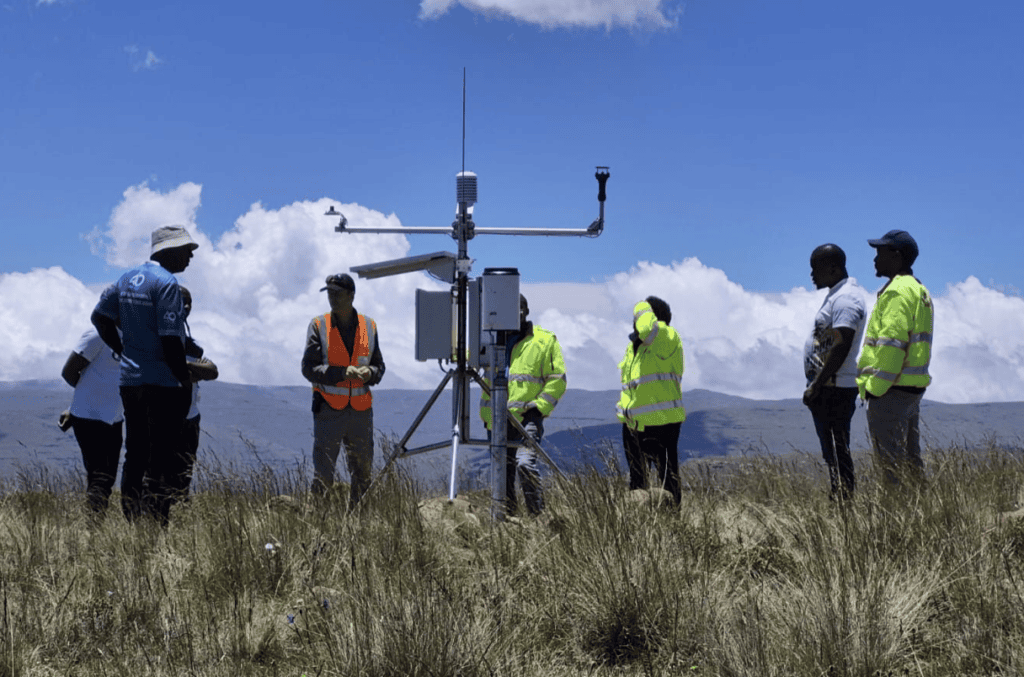
Spotlight on the African Mountain Research Foundation: Monitoring the Mountains that Shape a Continent
High up in the mountains of southern Africa — in Zimbabwe, Malawi, South Africa, and Lesotho — a quiet network of weather stations is generating data that could help predict the next drought, the next flood, the next climate shock for millions of people living in the valleys below. That network belongs to SWIDN Member…
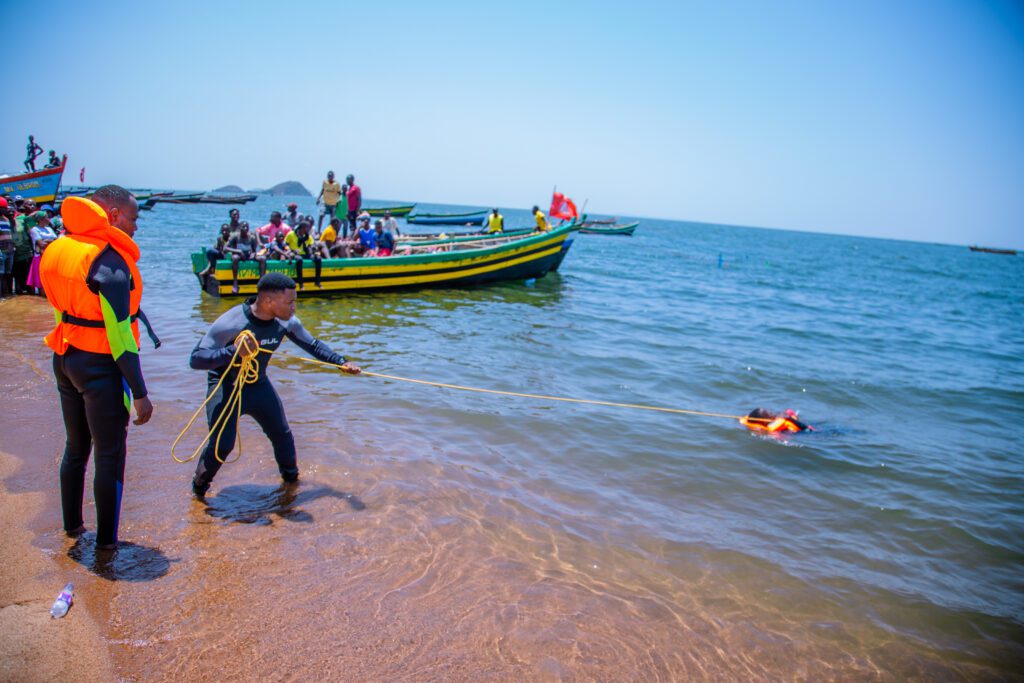
Beyond the Lifeboat: How the RNLI is Tackling Drowning in Tanzania, and the Programme Management That Makes It Work
Rachel Roland has spent more than 35 years working in Global Justice — and if there’s one thread that runs through all of it, it’s a deep commitment to understanding communities on their own terms. Now a Senior International Programme Manager at the RNLI, Rachel is leading the organisation’s drowning prevention work in Tanzania, bringing…
Changing the Story: How The Advocacy Team Is Reconnecting the Public with Global Justice
Lorriann Robinson is the founder and lead of The Advocacy Team, a consultancy helping organisations navigate political influence, shape policy, and reimagine how the case for global justice is made. We spoke with her about her work, the projects keeping her team busy, and why she believes the sector’s most difficult moment might also be…