3 November 2026
Can AI help us listen more closely to communities?

By Gabriele Caldas Cabral and Steve Powell, Causal Map
How can we measure the impact of development programmes without losing the voices and experiences of the people they’re designed to support?
As conversations around the ethical implications of AI continue across the global justice space, its potential role in monitoring and evaluation raises both opportunities and important questions. In a new research paper, SWIDN members Gabriele Caldas Cabral and Steve Powell explore whether AI could help make evaluation more inclusive, while challenging traditional approaches to measuring impact.
Too often, development programmes are evaluated against predefined targets and indicators, shaped by the priorities of funders rather than the experiences of local communities. This can mean important stories, unexpected outcomes and local perspectives are overlooked.
Their paper, Listening at Scale: AI-assisted Causal Mapping for Inclusive Evaluation, explores a different approach. By using AI to identify connections and patterns across large volumes of interviews and personal accounts, researchers can better understand how people themselves describe the changes happening in their lives, without forcing their experiences into predetermined categories.
Drawing on a case study of SWIDN Member, Tree Aid’s work in Burkina Faso, the authors demonstrate how this approach can uncover outcomes that conventional evaluation methods might miss.
Importantly, the paper also recognises the limitations and biases of AI. Rather than replacing human judgement, the authors argue that AI, used carefully and with appropriate oversight, could help amplify perspectives that have historically been marginalised in development research.
The research raises important questions for the international development sector about whose knowledge counts, who gets to define success, and how we can make evaluation more accountable to the communities at the heart of development work.
Read the full paper: Listening at Scale: AI-assisted Causal Mapping for Inclusive Evaluation
Photo Credit: Claudio Schwarz
More News

Supporting Indigenous-led conservation: Lessons from the Peruvian Amazon
New research from the University of Bath has highlighted the promising results of an initiative delivered by SWIDN member Cool Earth, exploring the relationship between financial security, Indigenous autonomy and rainforest conservation. The two-year pilot provided unconditional cash transfers to 211 people across three Asháninka communities in the Peruvian Amazon. Participants were free to determine how the funding…
Guest Blog: The Power, and Politesse, of Partnership
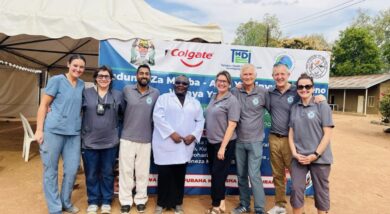
We’re pleased to share this guest article written by SWIDN member Bridge2Aid. Working alongside Tanzanian Health, Environment and Development Initiatives (THEDI), a local NGO, Bridge2Aid supports programmes led by Tanzanian partners to strengthen oral healthcare through training and skills sharing. With local expertise and leadership at the heart of the work, the partnership demonstrates how international collaboration…
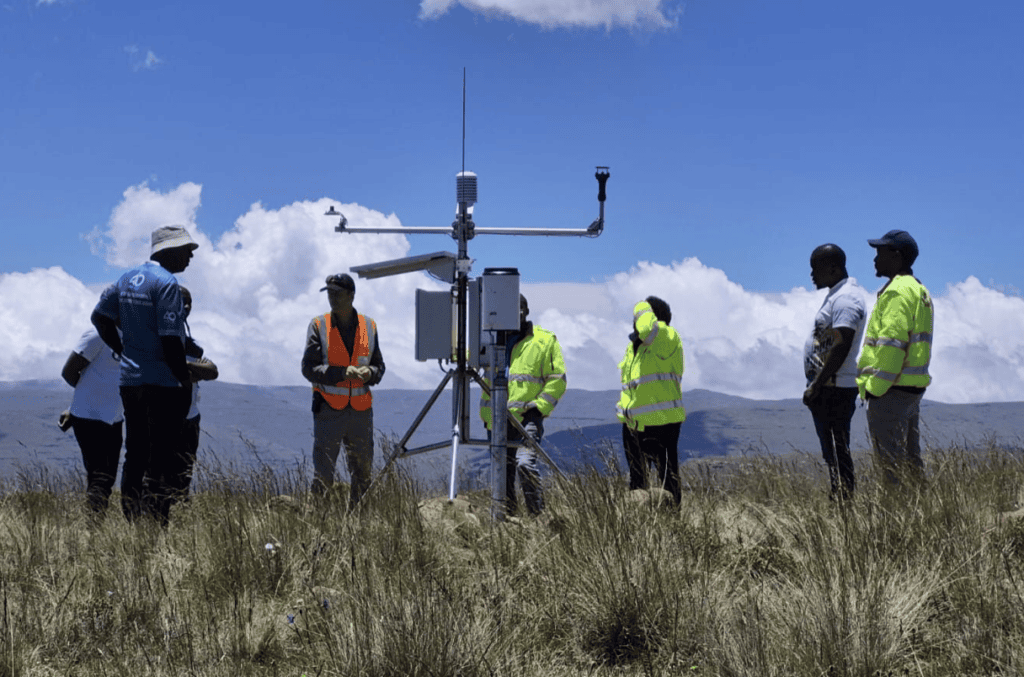
Spotlight on the African Mountain Research Foundation: Monitoring the Mountains that Shape a Continent
High up in the mountains of southern Africa — in Zimbabwe, Malawi, South Africa, and Lesotho — a quiet network of weather stations is generating data that could help predict the next drought, the next flood, the next climate shock for millions of people living in the valleys below. That network belongs to SWIDN Member…