
28 July 2025
Theory of Cause, anyone?

In June, SWIDN were delighted to host a discussion event with a few of our organisational and academic members at the Development Studies Association Conference at the University of Bath, hosted by the Centre for Development Studies. The topic was whether it’s possible to decolonise development and move practice into something reparative. If reparative development isn’t an oxymoron, what might it look like and how do we get there? As part of the panel event, I was privileged to present some ideas, inspired by the academic and feminist Chandra Mohanty’s call for us to look outside development in order to imagine alternatives to it (2003).
Looking for alternative sources of knowledge and inspiration outside development is a challenge: it involves leaving our comfort zones and echo chambers, determining for ourselves where learning may lie. I looked at the work of Dean Spade for inspiration. Dean Spade is an organiser, writer and teacher based in the US. He’s also a law professor working to build queer and trans liberation based in racial and economic justice. His work considers the model of mutual aid – more common in the US social justice sector than here in the UK – but relevant to international development in so many ways. One key way is how it challenges capitalist power over others, promotes anti-colonial values and advocates tackling root causes of inequality. This last focus of mutual aid is the one I chose to focus on while sharing at the DSA Conference in June: how we in the UK’s international development sector got where we are, and how understanding this might shed some light on charting a way forward.
Dean Spade says that mutual aid is built on the shared understanding that poverty and inequality is not the fault of individuals, but rather the result of systemic injustice (2020). Most organisations in 2025, large and small, have a Theory of Change which guides their organisational strategy, their programme design, and their communication to supporters and donors. But I’m not sure I’ve ever heard of one having a shared theory that maps the causes of the issue a charity is set up to tackle. What if we all adopted a Theory of Cause? I’m sure we’ve all had illuminating conversations over the years at sector networking events where it’s become abundantly clear how differently we all understand how and why global inequality began and has flourished, including the role of the UK and the West more broadly. Could a Theory of Cause serve as an organisational tool to bring teams together around a shared understanding of inequality? And how might a shared understanding of the drivers of inequality shape our responses to it?
Historian Walter Rodney’s work shows how levels of poverty were far higher after colonial governance than before (2018). Sabelo Ndlovu-Gatsheni charts the history of interaction between the West and parts of southern Africa, noting that the global political hierarchy established after previous colonies achieved independence required Africa to look outside itself as the only opportunity for economic growth (2023). Uma Kothari warns against charity narratives that conceal structural causes of poverty and make the political personal (2006).
What might an understanding of historical, structural and political causes of inequality do to our progress on anti-coloniality? How might this shift the stories and images we share? How might this impact our programme design, or even who makes the decisions around programme design? And if donors started requesting a Theory of Cause alongside a Theory of Change, what might that do to their priorities for funding, which we know are the gatekeeper to meaningful change in our sector?
In October, SWIDN will be exploring alternatives to aid and development, including Mutual Aid, in our Annual conference on Thursday 16 October. Chandra Mohanty’s call is the inspiration behind our conference planning and you can find out more about it here and also register here. It’s online, free and open to all. It’s also a chance to connect with others who are interested in having these conversations, for the purpose of learning and growing and trying new ways of working that are better than those we currently have. You’re welcome and we’d love to see you there.
And if you’re interested in chatting about the idea of a Theory of Cause, I’d love to hear from you. Feel free to email hannah@swidn.org.uk
More News
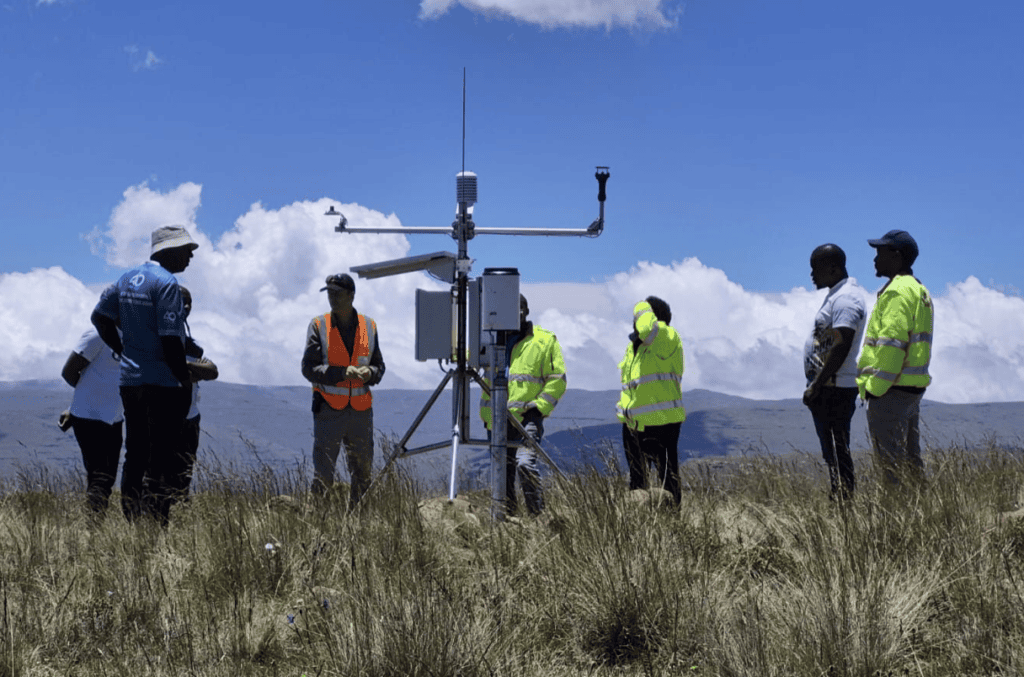
Spotlight on the African Mountain Research Foundation: Monitoring the Mountains that Shape a Continent
High up in the mountains of southern Africa — in Zimbabwe, Malawi, South Africa, and Lesotho — a quiet network of weather stations is generating data that could help predict the next drought, the next flood, the next climate shock for millions of people living in the valleys below. That network belongs to SWIDN Member…

Beyond the Lifeboat: How the RNLI is Tackling Drowning in Tanzania, and the Programme Management That Makes It Work
Rachel Roland has spent more than 35 years working in Global Justice — and if there’s one thread that runs through all of it, it’s a deep commitment to understanding communities on their own terms. Now a Senior International Programme Manager at the RNLI, Rachel is leading the organisation’s drowning prevention work in Tanzania, bringing…

Changing the Story: How The Advocacy Team Is Reconnecting the Public with Global Justice
Lorriann Robinson is the founder and lead of The Advocacy Team, a consultancy helping organisations navigate political influence, shape policy, and reimagine how the case for global justice is made. We spoke with her about her work, the projects keeping her team busy, and why she believes the sector’s most difficult moment might also be…