11 May 2023
School in a Bag – Transforming Lives Through Education
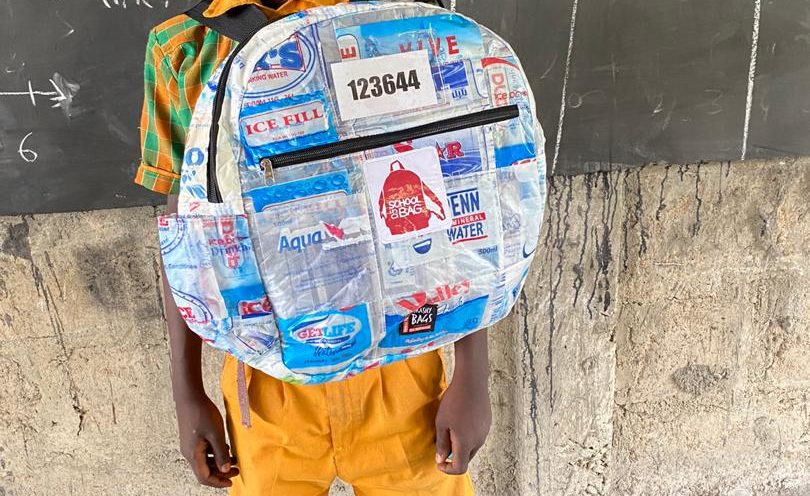
School in a Bag was born out of the Piers Simon Appeal, a charity set up in memory of Piers Simon who sadly lost his life in the Indian Ocean Tsunami on Boxing Day in 2004.
In 2009, following a project helping orphaned children in Swaziland, School in a Bag (SIAB) was born to provide educational resources to children deprived of the opportunity to learn. According to UNICEF figures, around 262 million children do not have access to education.
School in a Bag delivers rucksacks filled with stationery, learning resources, eating utensils and a hygiene kit to disadvantaged children around the world. To date, the charity has delivered 141,645 SchoolBags to children in 52 countries. The contents are generic and applicable to all countries and cultures – a typical SchoolBag contains: 12 pencils, a pencil case with 10 biros, 12 colouring pencils, a math set, a ruler, 6 exercise books (two each of lined, squared, plain), a water bottle, a lunch box (containing a spork), a gym bag, a small towel, soap, a toothbrush, toothpaste and a wash bag. The contents are always brand new and to ensure equality amongst the beneficiaries, the SchoolBags are all identical within each consignment.
To date, there are three different SchoolBags:
1. International – The classic original red SchoolBag, packed in the UK and shipped out to distribution partners.
2. In-Country – SchoolBags are sourced, procured and packed at the heart of the project by the distribution partners using money sent by SIAB.
3. Refugee – An unbranded and non-numbered SchoolBag for children seeking refuge in the UK and Ireland.
Each International and In-Country SchoolBag is numbered enabling donors to track their funded SchoolBag(s) on the School in a Bag website. Through images and data collected by the distribution partners, donors are often able to see an image and learn information about the beneficiary children they have supported.
The cost to provide a SchoolBag is £20.00. Aside from grant funding courtesy of Trusts, all funding comes from the public and ‘In-house’ events (organised by the team of two full-time and two part-time employees) – the annual three-day music festival Home Farm Fest over the second weekend of June held at School in a Bag’s HQ raises around two thirds of the charity’s running costs.
In amongst the 52 countries are reoccurring projects with amazing partners that School in a Bag have fostered since 2012. In August last year, the 20,000th SchoolBag was handed out in Nepal marking a decade of working together, (including the construction of three schools following the earthquakes in 2015), whilst in Tanzania, almost 12,000 of the 30,000 SchoolBags requested by our partners have been distributed.
In Ghana, the SchoolBag rucksacks are manufactured by the social enterprise organisation Trashy Bags Africa who employ local people to make them out of discarded water sachets – the project is a win, win, win – the environment becomes cleaner, locals are employed and children end up with a fabulous SchoolBag. Following the Taliban regaining control in Afghanistan in 2021 and the invasion of Ukraine; in 2022 the demand for Refugee SchoolBags by councils and hubs in the UK supporting the integration of refugees in to society soared. This certainly looks set to continue this year.
If you would like to learn more about School in a Bag, please visit our website (www.schoolinabag.org). I look forward to meeting some of you on the International Day of Education on January 24th.
Wishing you all a 2023 of happiness, health, success and accomplishment in the difference you are striving to make.
Blog and photo kindly provided by Luke Simon – Founder and CEO of School in a Bag
Originally posted on January 3rd 2023
More News

Can AI help us listen more closely to communities?
By Gabriele Caldas Cabral and Steve Powell, Causal Map How can we measure the impact of development programmes without losing the voices and experiences of the people they’re designed to support? As conversations around the ethical implications of AI continue across the global justice space, its potential role in monitoring and evaluation raises both opportunities…
Supporting Indigenous-led conservation: Lessons from the Peruvian Amazon
New research from the University of Bath has highlighted the promising results of an initiative delivered by SWIDN member Cool Earth, exploring the relationship between financial security, Indigenous autonomy and rainforest conservation. The two-year pilot provided unconditional cash transfers to 211 people across three Asháninka communities in the Peruvian Amazon. Participants were free to determine how the funding…
Guest Blog: The Power, and Politesse, of Partnership
We’re pleased to share this guest article written by SWIDN member Bridge2Aid. Working alongside Tanzanian Health, Environment and Development Initiatives (THEDI), a local NGO, Bridge2Aid supports programmes led by Tanzanian partners to strengthen oral healthcare through training and skills sharing. With local expertise and leadership at the heart of the work, the partnership demonstrates how international collaboration…