13 April 2026
Defy, Don’t Despair: How Systems Thinking Is Building a Fairer World

Valued SWIDN Member, Ian Roderick is the voluntary director of The Schumacher Institute for Sustainable Systems, a Bristol-based think tank that applies systems thinking to the world’s most pressing sustainability challenges. We spoke with him about the institute’s work, the projects keeping him busy, and why, even in a time of global crisis, he believes hope is not just possible – it’s essential.
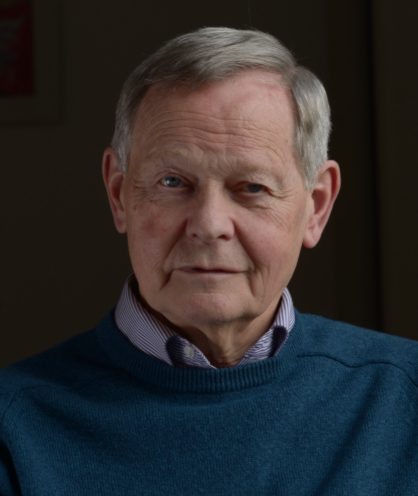
Who is Ian Roderick, and what is The Schumacher Institute?
Ian came to his role through a confluence of passions he’d spent a career developing. His academic background spans mathematics, operational research, and a master’s in Responsibility and Business Practice – a combination that gave him both rigorous analytical tools and a framework for thinking about how organisations and systems could be run more responsibly.
“I was fortunate to be in at the start of the institute,” he says, “as it combined my passions for sustainability and systems thinking. My background in business provided experience of strategic thinking for a global company and in conducting systems analysis of complex organisations.”
He has been involved in systems sciences throughout his career and currently serves as a past president and treasurer of the UK Systems Society. At the institute, his role is as much about teaching as it is about doing. “My role is to encourage others to develop their thinking in systems.”
The Schumacher Institute itself has roots going back to 2005, when the Schumacher Society UK decided to establish a research institute in Bristol. Officially becoming a charity in 2011 and receiving institute status in 2014, it is now a registered educational charity and global network of fellows and members dedicated to finding what the institute describes as “innovative systems solutions to the world’s most pressing problems through research, training, events and consultancy.”
The institute takes inspiration from E. F. Schumacher, the economist and author of Small is Beautiful, who combined concern for the environmental impact of technologies with a deep interest in human wellbeing and meaningful work. His thinking on appropriate technology, Buddhist economics, and people-centred development continues to animate the institute’s work today. As part of the wider Schumacher Circle, the institute sits alongside organisations including Practical Action, the Centre for Alternative Technology, and the New Economics Foundation.
The Best Part of the Job
For Ian, the most rewarding aspect of his work isn’t publications or policy wins – it’s people.
“Seeing other people, especially students, develop their skills and working with a great team on the steering group.”
This focus on nurturing thinking rather than just delivering outputs reflects something deeper about the institute’s philosophy. Much of the work is about bringing people into systems thinking exercises, with the institute acting as a coach. “The impact is often indirect,” Ian explains. “It is more about seeing what emerges – deeper understanding and resolution of differences. Our work is about long-term learning experiences blended with foresight and visioning.”
Over the past decade, the institute has hosted over 70 events, supported more than 250 fellows, worked with 200 student volunteers, and reached over 4,000 event participants. Its fellows and distinguished fellows have produced 86 publications and reports, and its learning courses have been attended by over 800 people.
Current Projects: From AI to Infant Feeding
The institute’s current portfolio is striking in both its range and ambition. Ian is currently working across several major projects:
AI augmented wisdom praxis — exploring how artificial intelligence can be meaningfully embedded in collaborative work practices, rather than simply layered on top of them.
Energy futures — asking a deceptively simple but radical question: is abundant energy actually a good thing? This kind of challenge to received wisdom is characteristic of the institute’s approach.
Infant feeding and early years obesity — applying whole systems approaches for Public Health Wales to address one of the most complex public health challenges facing families today.
Systems thinking for inclusivity in innovation — exploring how systemic perspectives can help make innovation more equitable and accessible.
Post-growth economics — examining whether society can transition to what Ian describes as a “maintenance mindset,” moving beyond the assumption that endless economic growth is either possible or desirable.
Community Resilience Toolkit — developing a global tool for adaptation and mutual support in the face of climate and social disruption.
Real Impact That’s Hard to Measure
When asked about the institute’s impact, Ian is thoughtful and honest about the difficulty of measuring what they do. Systems change doesn’t announce itself with fanfare.
“Much of our work is about bringing people into systems thinking exercises where we act as a coach. The impact is often indirect – it is more about seeing what emerges – deeper understandings and resolution of differences.”
One project he singles out with particular pride is the institute’s role as lead organisation in an eight-partner, five-country EU-funded project examining equity within planetary limits. Beyond the research outputs, it produced something Ian clearly values: a lasting relationship with Social Change and Development (SCAD) in southern India, a partnership that continues to this day.
The institute operates as an independent voice within sustainability debates, resisting what it describes as the partisan interests that tend to dominate local, national, and global policy conversations. Its theoretical grounding in Schumacher’s work gives it the freedom to explore radical approaches and address what it calls “taboo subjects” – moving debates into a whole-system, long-term perspective.
A Message for the World
If The Schumacher Institute could shout one message from the rooftops right now, what would it be?
Ian doesn’t hesitate, and his answer is philosophical as well as practical.
“In the light of the metacrisis that the world is in, it is our responsibility to resist existential despair and nihilism. Following Camus, we should face the ‘absurd’ with both defiance and joy, not with hopelessness – and then build meaning through what we gift to future generations.”
It’s a statement that feels true to the institute’s spirit: clear-eyed about the scale of the challenges, but refusing to be paralysed by them. It echoes a quote from Schumacher himself that the institute holds dear: “I can’t myself raise the winds that might blow us or this ship into a better world. But I can at least put up the sail so that when the wind comes, I can catch it.”
Challenges: Running on Goodwill
Like many mission-driven organisations, the institute faces real pressures. Funding is the persistent challenge, and Ian is direct about this. “We are trying to do a lot with just voluntary support, and keeping that going is a challenge.”
The institute’s response is to focus on building its fellowship and subscribing membership as the path to greater stability – investing in community rather than chasing external grants. This is itself a systems-aware response: building resilience from within rather than depending on external flows that can dry up.
The institute is also in a period of active reflection about its own identity and direction. “We periodically go through a process of thinking about what we are and what we do – this is one such period that looks as though it will result in an emphasis on supporting our fellowship.”
Being a member of SWIDN very much plays into this. Ian says “What I value most about SWIDN is that we’re sending a collective message out to the world about what people and organisations in the South West care about and their vision for change.”
Find out more & support The Schumacher Institute
The institute is based at the Create Centre in Bristol and is open to collaborations with researchers, organisations, students, and anyone working at the intersection of systems thinking and sustainability.Find out more, get involved and sign up to their newsletter at schumacherinstitute.org.uk
More News

Spotlight on Lucy Njomo and AYDA: Empowering Youth and Communities
SWIDN Member Lucy Njomo is the Founder and CEO of the African Youth Development Association (AYDA), a UK-based charity supporting the development of young people, including those with additional needs and their families, through education and training. In this blog, we explore Lucy’s journey, the challenges facing young people today, and why access to education…
Spotlight on Dolen Cymru Lesotho: 40 Years of Global Solidarity Between Wales and Lesotho
For more than four decades,SWIDN Member Dolen Cymru Lesotho has been quietly building something powerful: long-term, people-to-people connections between Wales and Lesotho.Founded over 40 years ago and now in its 41st year, the organisation isn’t a “traditional” international development charity. Instead, it focuses on bilateral learning – sharing skills, expertise, and experience between professionals in…

Meet Ruby Chen: Turning Ideas Into Engaging Art
At SWIDN, we are incredibly grateful to the people who share their time and creative skills to support our work. We’d like to take a moment to thank Ruby Chen, who volunteered her illustration skills to support SWIDN. Ruby brought curiosity, creativity and professionalism to her work with us, and we’re thankful for the time…