5 February 2026
Meet Ruby Chen: Turning Ideas Into Engaging Art

At SWIDN, we are incredibly grateful to the people who share their time and creative skills to support our work. We’d like to take a moment to thank Ruby Chen, who volunteered her illustration skills to support SWIDN. Ruby brought curiosity, creativity and professionalism to her work with us, and we’re thankful for the time and effort she dedicated to the project. We’re grateful for her contribution, and in this blog we’re pleased to introduce Ruby and share more about her experience, inspiration and creative process.

Ruby, what first inspired you to become an illustrator, and how did you get started in this field?
When I was around ten, I came across a comic book by Wan Wan, a Taiwanese illustrator. I started reading her blog and soon discovered a whole network of illustrators sharing their comic diaries online. That was the first time I realised that visual storytelling could be so engaging, and that “drawing” could actually be a real career.
So it wasn’t surprising that I chose design-related majors in both senior high school and university. Later, I moved to the UK to study illustration more formally, as the education system and industry here are more established. Since then, I’ve been developing my illustration practice alongside my work as a designer.
How would you describe your artistic style, and what influences have shaped it most?
I work with a few visual styles depending on the project. Some of my go-to approaches are a flat, graphical style (sometimes with subtle textures), which is the style used in the SWIDN illustration series, and a digital watercolour style. I also enjoy adapting my style and trying new things for different design projects, for example, a more modern, vector-based illustration style when it suits the context.
I’d love to share some examples of these here:
Flat graphical: Sustainability Report | Ruby Chen Design
Flat graphical with subtle textures: https://www.rubychendesign.com/editorial-illustrations
Watercolour: https://www.rubychendesign.com/i-am-up )
It’s hard to summarise all the influences behind my creative voice, but I know that online comics and American cartoons played a big role in shaping my early style development when I was growing up and first exploring illustration. I’m also deeply inspired by illustrators like John Holcroft and Davide Bonazzi, who use visual metaphors so cleverly. Their work encourages me to keep strengthening my own visual storytelling, whether that’s through building strong concepts with thoughtful visual elements or studying related resources.
What does your creative process look like – from idea to finished illustration?
My creative process varies based on the project, but it usually begins with (very) rough and quick pencil drafts. I also often do some topic research, gather references, and create mind maps on paper to get my ideas flowing and identify keywords for visual elements. For client projects, I’ll then draw another vision of cleaner drafts for better communication, and for self-initiated projects, I tend to move straight from rough sketches into the next stage. Once the direction is decided, I move into digital tools like Adobe Creative Suite or Procreate to refine and finalise the illustration. I also like to draw with different materials in my sketchbook to capture some life moments or quick ideas.

Do you have a favourite piece you’ve created (for SWIDN or otherwise) and the story behind it?
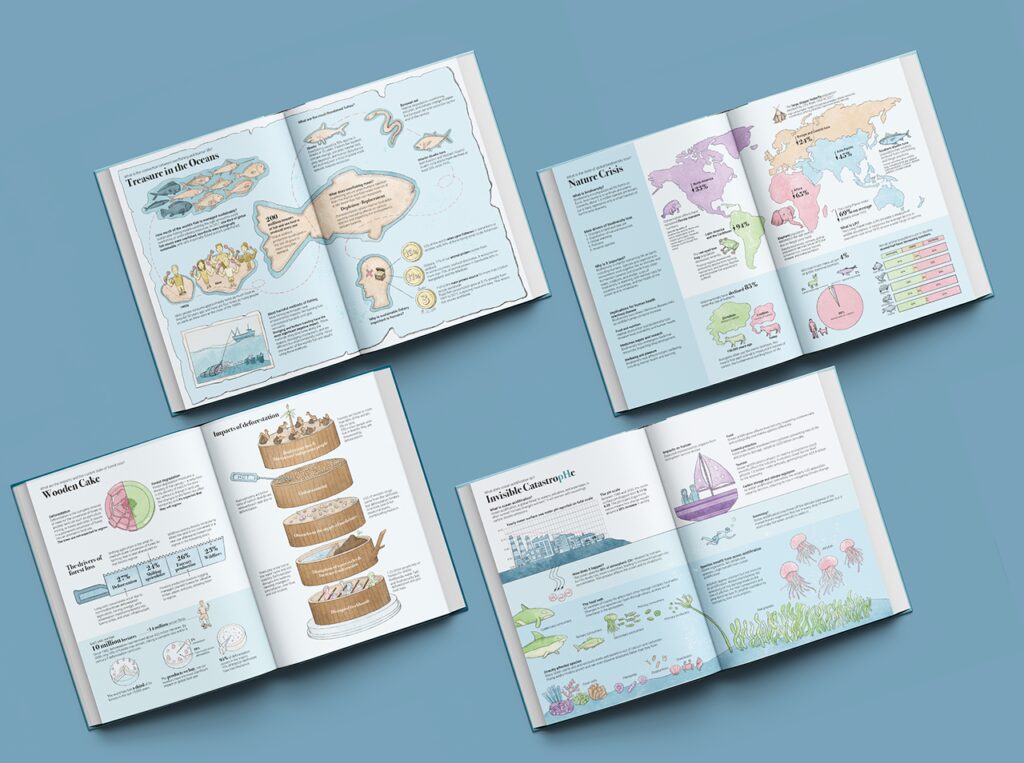
One of my favourite projects is “The Environment and Me”, my MA graduation project, an Illustration infographic book covering 12 environmental issues.
I’ve always wanted to combine my design and illustration skills to create work that’s not only visually appealing but also positive and impactful. My goal for this project was to “visualise and beautify information that’s often considered dull or difficult” in a way that feels accessible and engaging.
I consider the project a success because it used approachable illustrated elements and clear design to help readers be more interested in environmental topics and digest the complex information more easily.
What are you most looking forward to exploring next in your creative journey?
Even though I’ve worked in the design field for a few years, I still feel relatively new to the illustration industry, which means the future feels wide open. I’m currently taking baby steps in my illustration career path. One of my recent goals is to create editorial illustrations for magazines or newspapers, especially since I really enjoy visual metaphor and storytelling (in case you didn’t know). I’m also excited to explore other areas like children’s publishing, advertising illustration, and even live illustration. There are so many possibilities ahead, and I’m motivated to keep learning and work even harder!
Thank you to Ruby for volunteering her time and offering insight into her illustration practice. We’re pleased to be able to share her work and creative journey with our network. If you’d like to view Ruby’s portfolio or contact her about potential projects, you can find more information on her website:
More News
Spotlight on the African Mountain Research Foundation: Monitoring the Mountains that Shape a Continent
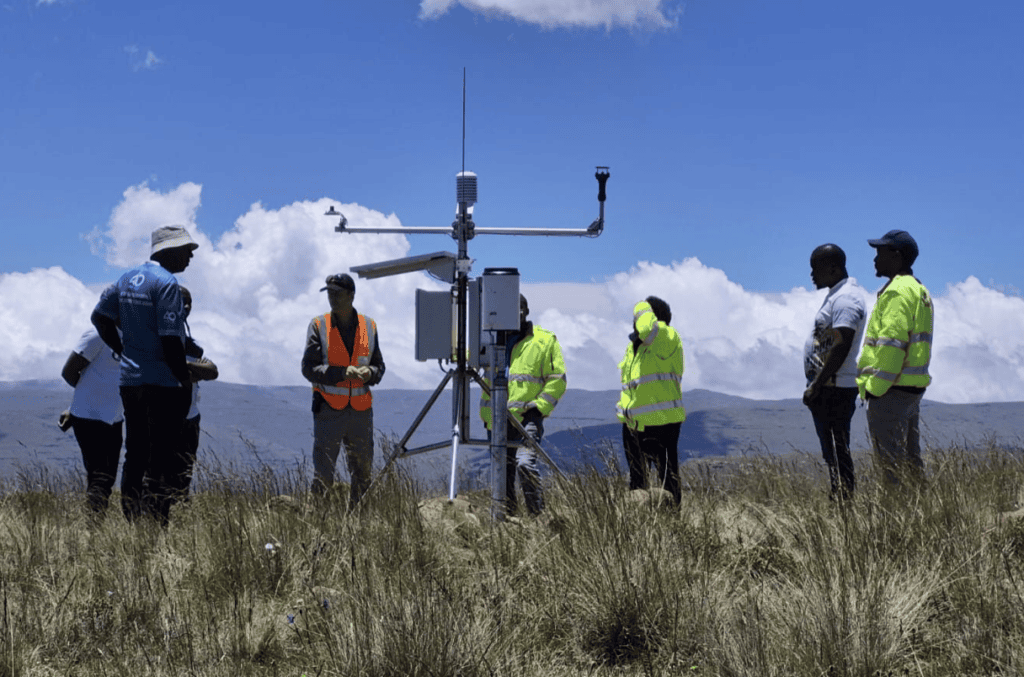
High up in the mountains of southern Africa — in Zimbabwe, Malawi, South Africa, and Lesotho — a quiet network of weather stations is generating data that could help predict the next drought, the next flood, the next climate shock for millions of people living in the valleys below. That network belongs to SWIDN Member…
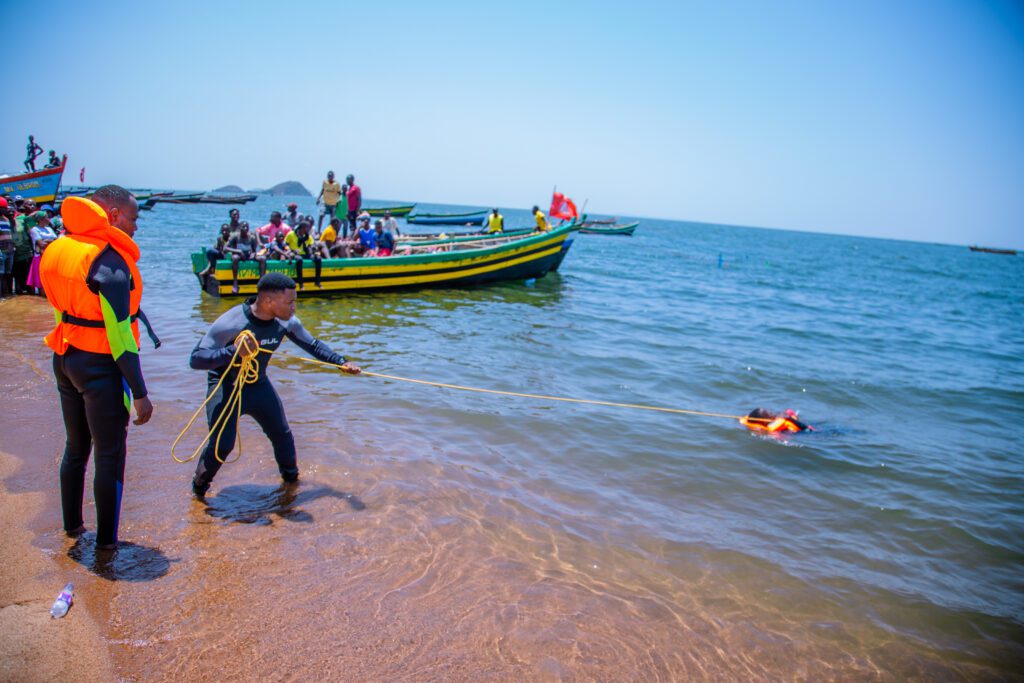
Beyond the Lifeboat: How the RNLI is Tackling Drowning in Tanzania, and the Programme Management That Makes It Work
Rachel Roland has spent more than 35 years working in Global Justice — and if there’s one thread that runs through all of it, it’s a deep commitment to understanding communities on their own terms. Now a Senior International Programme Manager at the RNLI, Rachel is leading the organisation’s drowning prevention work in Tanzania, bringing…

Changing the Story: How The Advocacy Team Is Reconnecting the Public with Global Justice
Lorriann Robinson is the founder and lead of The Advocacy Team, a consultancy helping organisations navigate political influence, shape policy, and reimagine how the case for global justice is made. We spoke with her about her work, the projects keeping her team busy, and why she believes the sector’s most difficult moment might also be…