11 May 2026
Meet Megha Kashyap: Feminist Campaigner, Researcher and Decolonising Fellow

For more than a decade, SWIDN friend Megha Kashyap has been doing the kind of work that doesn’t make headlines but quietly shifts the ground beneath institutions. As a feminist campaigner, researcher and trainer working across the Global South, she brings decolonial, anti-racist and feminist ways of working into the everyday machinery of organisations — and makes it stick.
Now in her role as Decolonising Research Fellow at London South Bank University (LSBU), Megha leads institutional change, research partnerships, and creative approaches to building anti-racist, inclusive systems. Over 12+ years, she has managed complex multi-country projects across Africa, the UK and Asia, led large donor-funded programmes, and built cross-organisational structures that don’t just talk about values — they embed them.
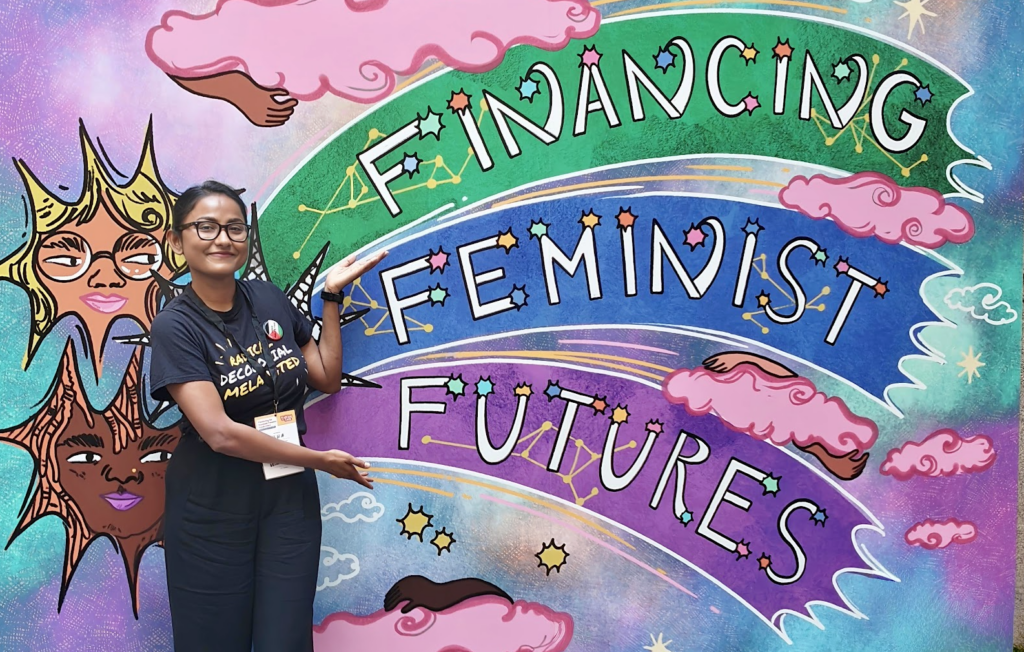
Who Is Megha Kashyap?
Megha is a systems thinker with a creative soul. She works at the intersection of gender rights, racial justice and climate justice, and brings a rare combination of analytical rigour and imaginative flair to her advocacy.
Her work spans universities, international development organisations, and policy spaces. Whether she’s facilitating workshops on whiteness, leading multi-country research on decolonising foreign funding, or designing a murder mystery game that unpacks systemic racism — Megha’s approach is the same: make the complex accessible, and make change feel possible.
A Career Shaped by Systems and Stories
Megha’s path into this work was shaped by a deep commitment to structural change. Rather than focusing on individual behaviour, she has always been drawn to the systems that shape behaviour — and how those systems can be redesigned.
Her 12+ years of experience spans national advocacy campaigns in India, child protection programmes supporting 130 schools in the Himalayan region, and leading a USD 3 million multi-country gender justice programme. Most recently, her research on decolonising foreign funding policies — developed with partners in Kenya, India and Bangladesh — was accepted and published by the UK Parliament’s International Development Committee as part of their inquiry into the Future of UK Aid, and she will be presenting her work at the upcoming Global Partnerships Conference in London in May.
“The best part of my role is shaping systems that make real organisational change possible,” she says. “Facilitating workshops and seeing the shift in awareness, capability and imagination is especially fulfilling.”
Facing Up to the Sector’s Biggest Challenges
When it comes to what needs to change in international development, Megha doesn’t pull her punches.
Her rooftop message? “The world we live in is screwed, you and I alone cannot unscrew it. We have to collectively unscrew it so we leave a better, just world for the next generation.”
For Megha, that collective effort starts with something specific: centring Global South leadership in research, partnerships and funding decisions. That could mean:
- Inviting Southern partners to shape agendas, not just deliver on them
- Citing their work and paying them for their expertise
- Questioning the assumptions built into traditional donor frameworks
These aren’t abstract ideals — they’re the foundation of the research she has spent years building.
Closing the Racial Awarding Gap: Institutional Change in Action
One of Megha’s most significant recent achievements has been her contribution to reducing LSBU’s racial awarding gap — the disparity in degree outcomes between white students and students of colour — from 12.2% in 2022–23 to 4.4% in 2025–26.
This didn’t happen by accident. It was the result of 52+ workshops and capability-building initiatives, delivered to staff across the university, covering topics like whiteness, critical pedagogies, and how to embed anti-racism in everyday work.
For this, she received the Rising Star (Public Sector) Award from We Are the City.
Alongside this, Megha recently completed a mixed-methods insight study — combining a large-scale survey with focus group discussions — to understand how students engage with anti-racism, and how institutions can better support that work.
Storytelling as Advocacy
Away from formal research and policy work, Megha is a storyteller.
She creates graphic visuals, writes a personal blog called Etched by Clouds documenting her lived experience of navigating social, economic and political systems, and develops creative campaigning materials — including policy explainers on women’s economic justice, anti-racism, and climate colonialism content for COP28.
She has also developed a murder mystery game that explores concepts of systemic and structural racism in the UK — turning one of the sector’s most challenging conversations into something genuinely engaging and accessible.
“I love storytelling in all its forms,” she says. “Films, comics, creative projects — they often weave their way back into my advocacy work.”
What Megha Loves About SWIDN
For Megha, SWIDN stands out for its values in action.
“One of the things I love about SWIDN is the compassion of the community,” she says. “I loved attending the annual conference and found it an exciting, collaborative space. I appreciate how SWIDN amplifies voices doing structural, intersectional work across the sector — including much of the feminist and anti-racist analysis I care about.”
One Small Action You Can Take Today
Megha’s ask is simple but structural: centre Global South leadership.
That could mean inviting Southern partners to shape research agendas, citing their published work, paying them fairly for their expertise, or interrogating the assumptions embedded in how international funding flows.
Small shifts in who holds the pen — and who sets the agenda — add up.
You can explore Megha’s creative outputs at kashyapmegha.wixsite.com/mysite/creative-outputs and her publications via the LSBU Research Portal.
More News
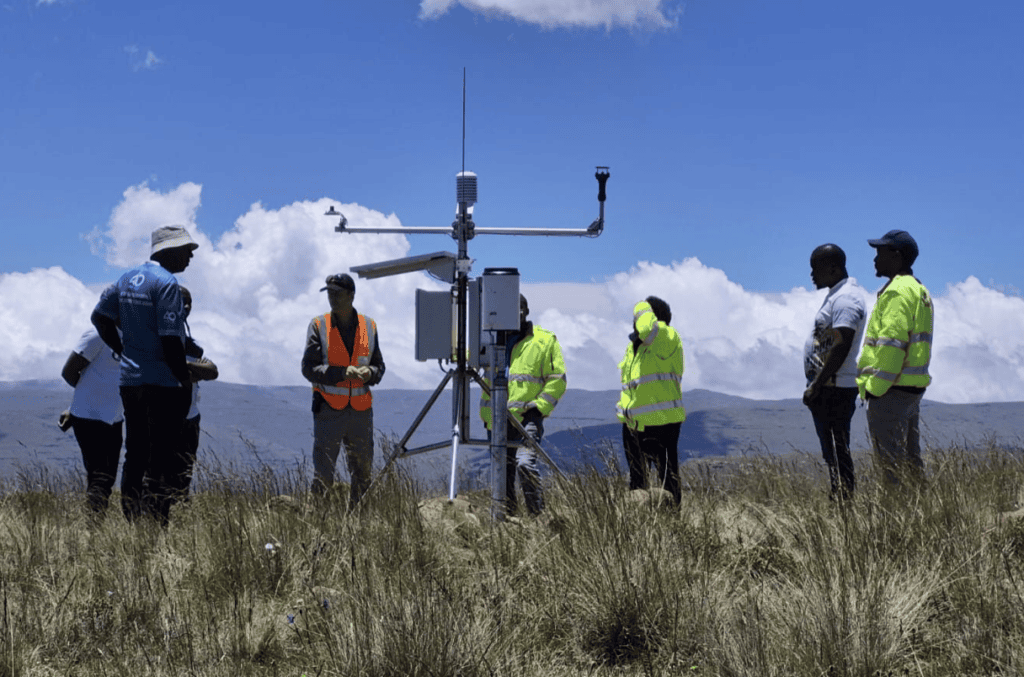
Spotlight on the African Mountain Research Foundation: Monitoring the Mountains that Shape a Continent
High up in the mountains of southern Africa — in Zimbabwe, Malawi, South Africa, and Lesotho — a quiet network of weather stations is generating data that could help predict the next drought, the next flood, the next climate shock for millions of people living in the valleys below. That network belongs to SWIDN Member…

Beyond the Lifeboat: How the RNLI is Tackling Drowning in Tanzania, and the Programme Management That Makes It Work
Rachel Roland has spent more than 35 years working in Global Justice — and if there’s one thread that runs through all of it, it’s a deep commitment to understanding communities on their own terms. Now a Senior International Programme Manager at the RNLI, Rachel is leading the organisation’s drowning prevention work in Tanzania, bringing…

Changing the Story: How The Advocacy Team Is Reconnecting the Public with Global Justice
Lorriann Robinson is the founder and lead of The Advocacy Team, a consultancy helping organisations navigate political influence, shape policy, and reimagine how the case for global justice is made. We spoke with her about her work, the projects keeping her team busy, and why she believes the sector’s most difficult moment might also be…