
SWIDN at the DSA Conference 2025
Towards a Meaningful Practice of Reparative Development: Bridging Crises and Reimagining Opportunities for Decolonisation
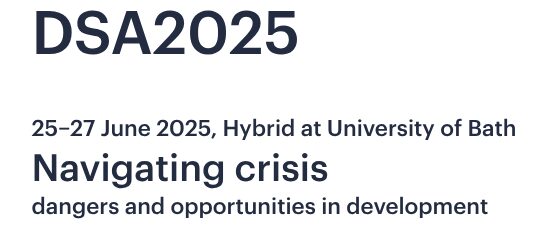
Join us on 26th June at the University of Bath as we collaborate with colleagues to convene a round table discussion at the 2025 Development Studies Association conference;
9am – 10.30am / 11am – 12.30pm
Through exploring decolonisation discourses and practice, these innovative panels consider opportunities and challenges in shifting international development, debating whether it’s possible to shape development into reparative, anti-oppressive practice and identifying actionable strategies to do so.
Bringing together academics, practitioners and policy experts, this panel addresses the deepening crisis in international development, marked by colonial legacies, systemic racism, and a legitimacy crisis within global politics. Amid shifts in funding frameworks and mechanisms, organisational relocations to the Global South, and the creation of job roles focused on decolonisation, development actors are increasingly moving towards decolonisation and locally-led approaches. Yet these shifts raise critical questions:
1. Can the colonial foundations of “development” be meaningfully dismantled, or do they remain inherent to its structures?
2. What role can ‘Global North’ actors play in fostering equitable and reparative development, if any?
3. How might a reparative solidarity framework redefine the Global North’s role in development from perpetuating harm to advancing anti-oppressive practices?
4. How are the most marginalised participants responding to these approaches—are they embracing, resisting, or adapting to them?
5. In a world increasingly shaped by populist politics, what aspects of development rhetoric and practice still have relevance or a future?
Through creative formats and two diverse and authoritative panels of global heterodox thinkers and practitioners, these experimental panels envision a shift toward reflexive, responsible, and reparative development. Through two panel events, our collaborative partnership will offer brief statements from panellists, moderated discussion with bold ideas, and practical analysis of real-world cases. Audience contributions will shape inclusive dialogue, producing practical recommendations for ethical, anti-oppressive approaches to development. These sessions promise to identify actionable strategies for meaningful global change and foster collaboration between academia and practitioners to reimagine development.
Find out more about the conference panels
Additionally; with grateful thanks to the University of Bath, we are able to offer 4 SWIDN members the opportunity to have their conference ticket cost (for a day ticket) covered by SWIDN to enable them to attend. We are also able to offer a further 8 SWIDN members the opportunity to feature a poster representing their work at the conference venue, with printing costs covered by SWIDN.
Please get in touch via email if either of these is something you are interested in, and let us know how we can help.
Following the day at the conference we will be holding our Summer Social networking session in Bristol to continue the discussion – find out more here.
Location
the University of Bath
Start date & time
June 26th, 2025 at 09:00
End date & time
June 26th, 2025 at 12:30
More Events

SWIDN Member Benefits
Join us for an informal lunchtime session to explore the benefits and opportunities available to you as a SWIDN member. We know that team changes and evolving member opportunities can sometimes make it difficult to stay on top of everything your membership offers. That’s why we’re kicking off 2026 with this informal, lunch time session…

Communications Working Group
Exploring AI, Google Ads & Fundraising Strategies Join us for a peer-led working group session for SWIDN members working in Communications. This lunch time, online working group session will explore the tools and tactics being used across the sector to improve and communicate our impact. This collaborative session is designed as an informal networking space…